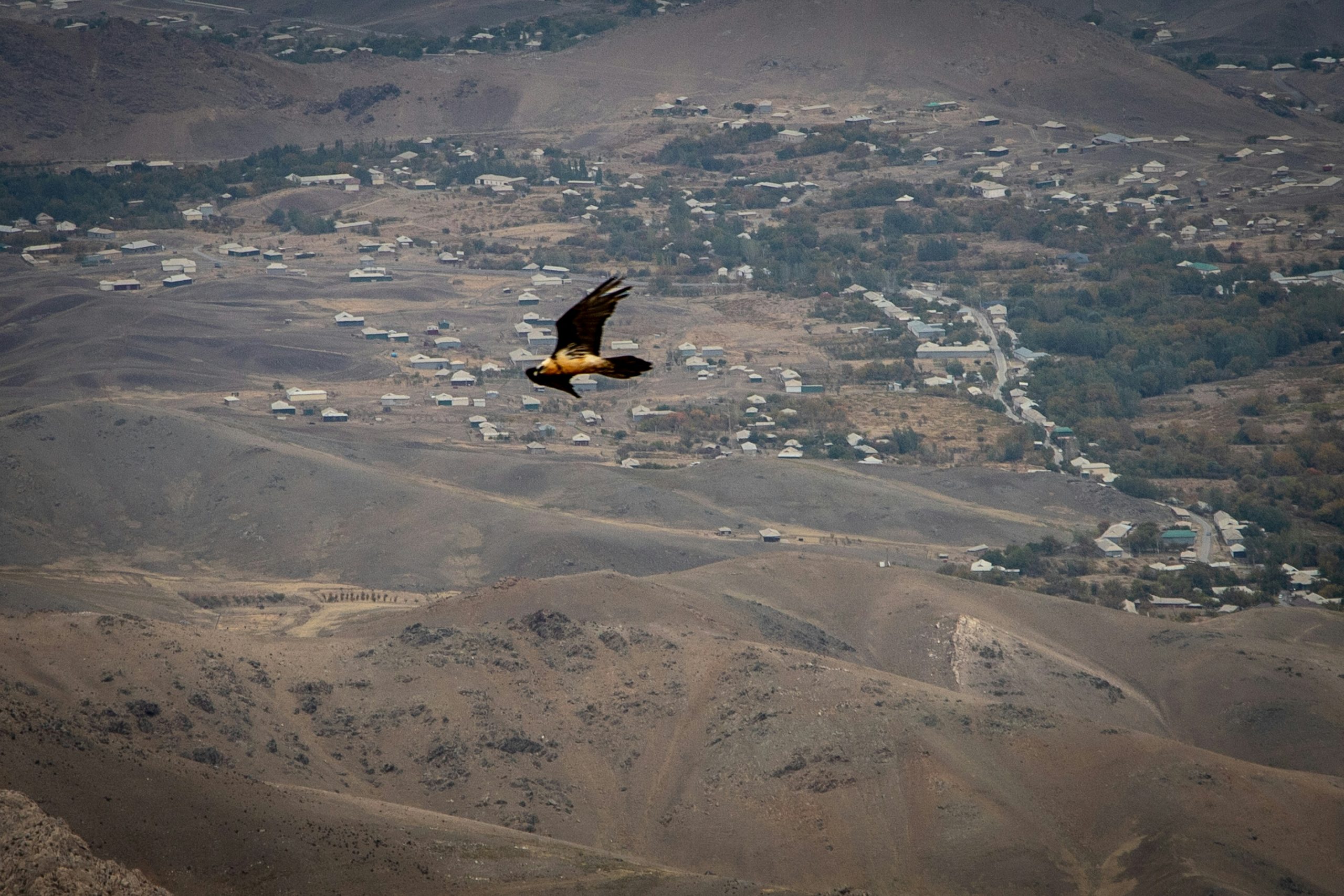
For decades, scientists have relied on increasingly sophisticated technology to understand how wild animals move through the natural world. From migrating birds crossing entire continents to predators traveling through remote mountain ranges, tracking technology has revealed behaviors that would have been almost impossible to study through traditional observation alone.
Among the most fascinating subjects of this research are eagles.
Known for their impressive wingspans, exceptional eyesight, and ability to travel across enormous landscapes, these powerful birds have long attracted the attention of wildlife researchers. Their movements can reveal important information about migration, feeding habits, nesting territories, and the environmental conditions they depend on.
Now imagine following an eagle’s journey not for a few weeks or months, but across many years.
A small tracking device attached to the bird could record thousands of geographical positions, allowing researchers to build a detailed picture of where it travels, where it spends time, and how its movements change.
Such a long-term record could reveal remarkable patterns. It might show that an eagle repeatedly returns to certain locations, travels much farther during particular seasons, or changes its preferred territory as environmental conditions shift.
But there is an important distinction between what wildlife tracking technology can demonstrate and what an extraordinary headline might suggest.
Without an identified eagle, research team, or original scientific publication, a claim that one particular bird confused scientists for more than 20 years cannot be independently established. Nevertheless, the science behind long-term eagle tracking is genuinely fascinating and offers valuable insights into how researchers study some of nature’s most impressive travelers.
Why Scientists Attach GPS Trackers to Eagles
Watching an eagle in the wild can be an extraordinary experience, but observing one occasionally provides only a limited understanding of its behavior.
An eagle might spend several hours near its nest before disappearing over a distant ridge. Researchers could know where the bird was resting or hunting, but they would have little information about its movements afterward.
GPS tracking helps fill those gaps.
Scientists use specialized tracking devices to record an animal’s geographical position at predetermined intervals. Depending on the equipment, some devices can also collect information about altitude, movement, activity, and other environmental conditions.
The information is then used to reconstruct the animal’s movements on a digital map.
For researchers studying eagles, this can answer several important questions:
-
How large is an individual’s home range?
-
Does the bird remain in the same region throughout the year?
-
Which areas does it regularly use for hunting?
-
Does it return to familiar nesting locations?
-
How far does it travel when food becomes less available?
-
Do its movements change as it gets older?
These questions are particularly important because eagles often depend on extensive territories.
Protecting a nesting site alone may not be sufficient if the surrounding landscape contains important feeding grounds or movement corridors.
By following individual birds, scientists can better understand the geographical areas necessary for their survival.
What Makes Long-Term Eagle Tracking So Interesting?
A short wildlife study can reveal useful information, but it may not capture the full complexity of an animal’s life.
An eagle’s movements can change according to several factors, including its age, breeding status, food availability, weather, and the condition of its habitat.
For example, a young eagle that has recently left its nest may travel through unfamiliar areas while developing the skills needed to survive independently.
An adult breeding bird may behave differently, spending considerable time within an established territory.
A bird that regularly hunts in one region might also travel farther when prey becomes scarce.
These differences are important because researchers need to distinguish ordinary seasonal changes from unusual movements.
