I Thought It Was a Pile of Fallen Leaves in My Yard—Then I Realized It Was a Gaboon Viper
Some of the most frightening wildlife encounters don’t begin with a sudden movement, a loud warning, or an animal charging toward you. Sometimes, the danger is already there, hiding in plain sight.
That was the unsettling lesson behind one early-morning encounter with a Gaboon viper. What initially appeared to be a harmless collection of leaves or garden debris turned out to be one of Africa’s most remarkably camouflaged venomous snakes.
The experience is a reminder that nature doesn’t always make dangerous animals easy to recognize. Some species survive precisely because they can remain almost invisible until another creature gets too close.
The Gaboon viper (Bitis gabonica) is particularly impressive in this regard. Its intricate markings, heavy body, enormous fangs, and ambush-hunting behavior make it one of the most distinctive snakes in the world.
But understanding this animal requires looking beyond its frightening reputation. It is a specialized predator that generally avoids unnecessary confrontation with humans, plays an important role in its ecosystem, and deserves to be treated with caution and respect.
The Moment a Harmless Shape Became Something Terrifying
The morning began like any other.
Stepping outside, I expected to see little more than damp grass, garden shrubs, and the familiar quiet of the yard. Nothing seemed unusual until I noticed a strange shape near the edge of the lawn.
At first glance, it looked like a fallen branch surrounded by dried leaves.
Something about its arrangement seemed unusual, almost too organized to be natural. Still, I couldn’t immediately identify what I was looking at.
I moved closer.
Then I realized it wasn’t garden debris at all.
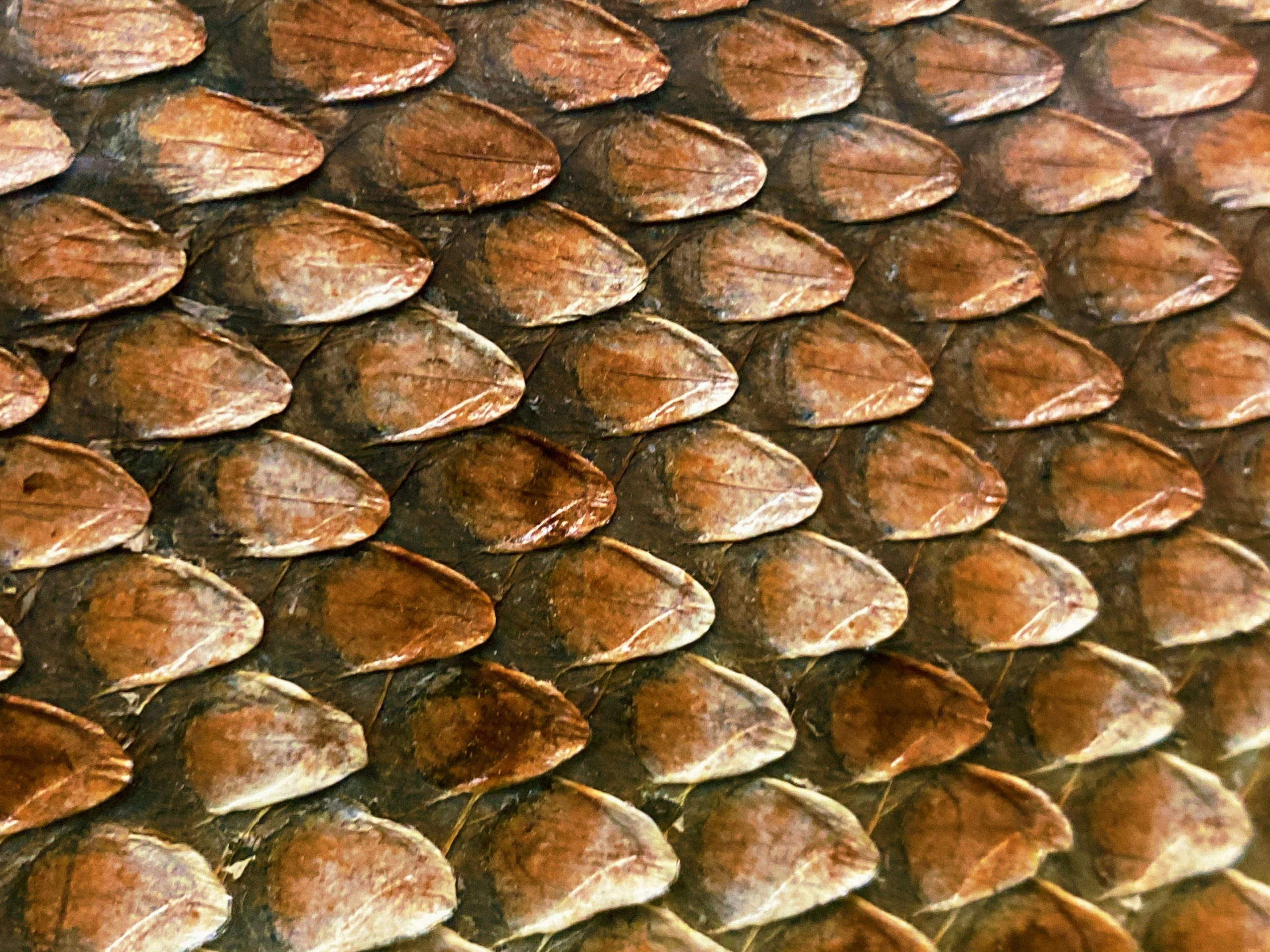
The shape was a snake, lying motionless against the ground. Its elaborate brown, cream, and darker markings blended so effectively with the surrounding vegetation that it was difficult to distinguish its body from the leaf litter.
It appeared to be a Gaboon viper.
The realization was frightening. This wasn’t an animal to approach out of curiosity or attempt to move out of the way.
I carefully backed away, keeping a safe distance and leaving the snake undisturbed.
What made the encounter especially unsettling was how easily I could have overlooked it. Had I stepped closer without noticing the animal, the situation could have become extremely dangerous.
Why the Gaboon Viper Is So Difficult to Spot
The Gaboon viper has one of the most effective camouflage patterns found among venomous snakes.
Its body features a complex arrangement of brown, cream, yellowish, and darker geometric markings. These shapes break up the outline of the snake, helping it blend into fallen leaves, soil, and vegetation.
The pattern isn’t simply decorative. It serves a practical purpose.
Gaboon vipers are ambush predators. Rather than spending their time actively chasing prey, they remain hidden and wait for suitable animals to approach.
Their coloration makes that strategy remarkably effective.
The snake’s broad, triangular head also has distinctive markings that resemble the shapes and colors of leaves on a forest floor. When the animal remains motionless, even someone looking in its general direction may struggle to recognize it.
According to the Smithsonian’s National Zoo, Gaboon vipers are terrestrial snakes that spend time on the forest floor. Their camouflage and passive hunting behavior help them remain concealed while waiting for prey.
This adaptation also explains why accidental human encounters can be dangerous. A person may not realize a snake is nearby until they are already close to it.
Where Gaboon Vipers Are Naturally Found
Gaboon vipers are native to sub-Saharan Africa, particularly parts of Central and West Africa.
