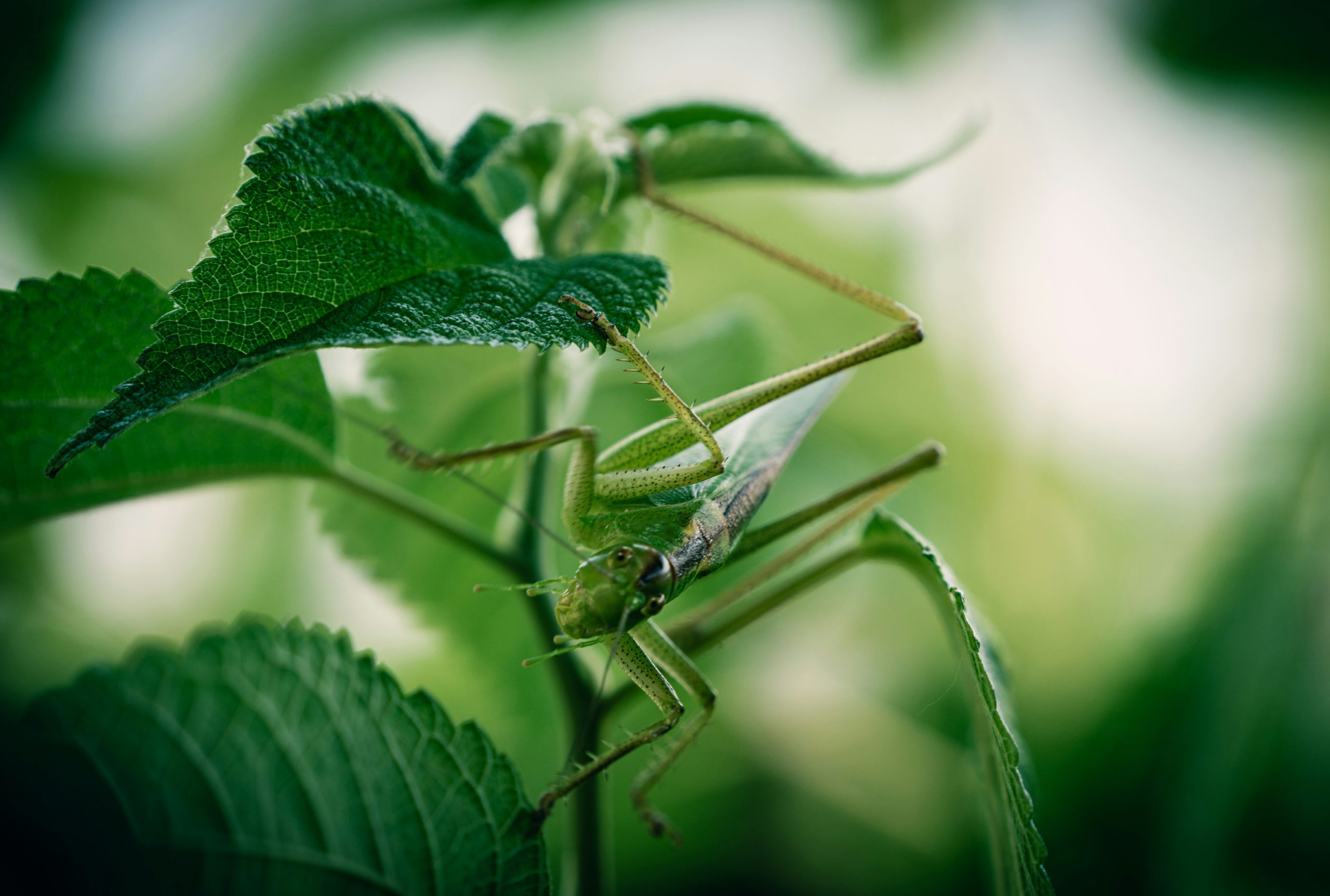
I Opened My Front Door and Found Dozens of Tiny Praying Mantises—What Happened Next Was Remarkable
Some mornings begin with something so unexpected that an otherwise ordinary day suddenly feels different.
That was the feeling when I opened my front door one quiet morning and discovered dozens of tiny praying mantises scattered across the entrance. They were so small that many were no bigger than the nail of my little finger, yet they seemed to be moving everywhere at once.
Some clung to the brickwork beside the doorway. Others cautiously crossed the concrete, while a few had already begun making their way toward the nearby plants. At first, I could hardly believe what I was seeing. The entrance to my home had become the starting point for an entire generation of insects.
The more I looked, the more fascinating the scene became. These weren’t simply a few bugs that had wandered into the wrong place. They appeared to be newly hatched praying mantises, emerging into the world and beginning the independent lives their instincts would guide.
It was a small moment, easily overlooked by someone in a hurry. But standing there, watching these delicate creatures spread across the entrance, I found myself thinking about how much of nature unfolds quietly around us without our ever noticing.
Where Do So Many Tiny Praying Mantises Come From?
When dozens of praying mantises appear together, the explanation is often an egg case called an ootheca.
A female praying mantis produces this protective structure after mating. Depending on the species, she may attach it to a branch, stem, fence, wall, or another suitable surface. The material begins as a soft secretion that hardens into a protective covering, helping shield the developing eggs from environmental conditions.
Inside the ootheca, numerous eggs develop until the young are ready to emerge. The number varies by species, but a single egg case can contain dozens or even more than a hundred eggs.
The timing of hatching depends on the species, local climate, and environmental conditions. In many temperate regions, young mantises emerge during spring or early summer, when warmer weather makes survival more likely.
The sight of so many hatchlings in one place can therefore be explained by a single event: an egg case has reached the point at which its young are ready to emerge.
If an ootheca was attached to a nearby wall, fence, shrub, or other surface, the hatchlings might spread across the surrounding area within a short period.
That possibility makes a discovery like this particularly interesting. What initially looks like a sudden invasion may actually be the visible beginning of a natural process that has been developing out of sight for weeks or months.
A small, hardened case can hold an entire generation in waiting. Then, under suitable conditions, the hidden activity becomes visible all at once.
What Newly Hatched Praying Mantises Look Like
Newly hatched praying mantises are miniature versions of the insects they will eventually become. Their bodies are delicate, their legs are thin, and their movements can appear hesitant as they make their way into the surrounding environment.
Their coloring varies by species and developmental stage. Some hatchlings appear pale or greenish, while others have brownish tones. Their appearance may also change as they grow and shed their outer coverings.
Although they look fragile, these young insects are already equipped with many of the features that make adult praying mantises such distinctive predators.
Their front legs are specially adapted for catching prey. Unlike ordinary walking legs, these forelegs fold against the body and carry rows of spines that help hold captured insects in place.
