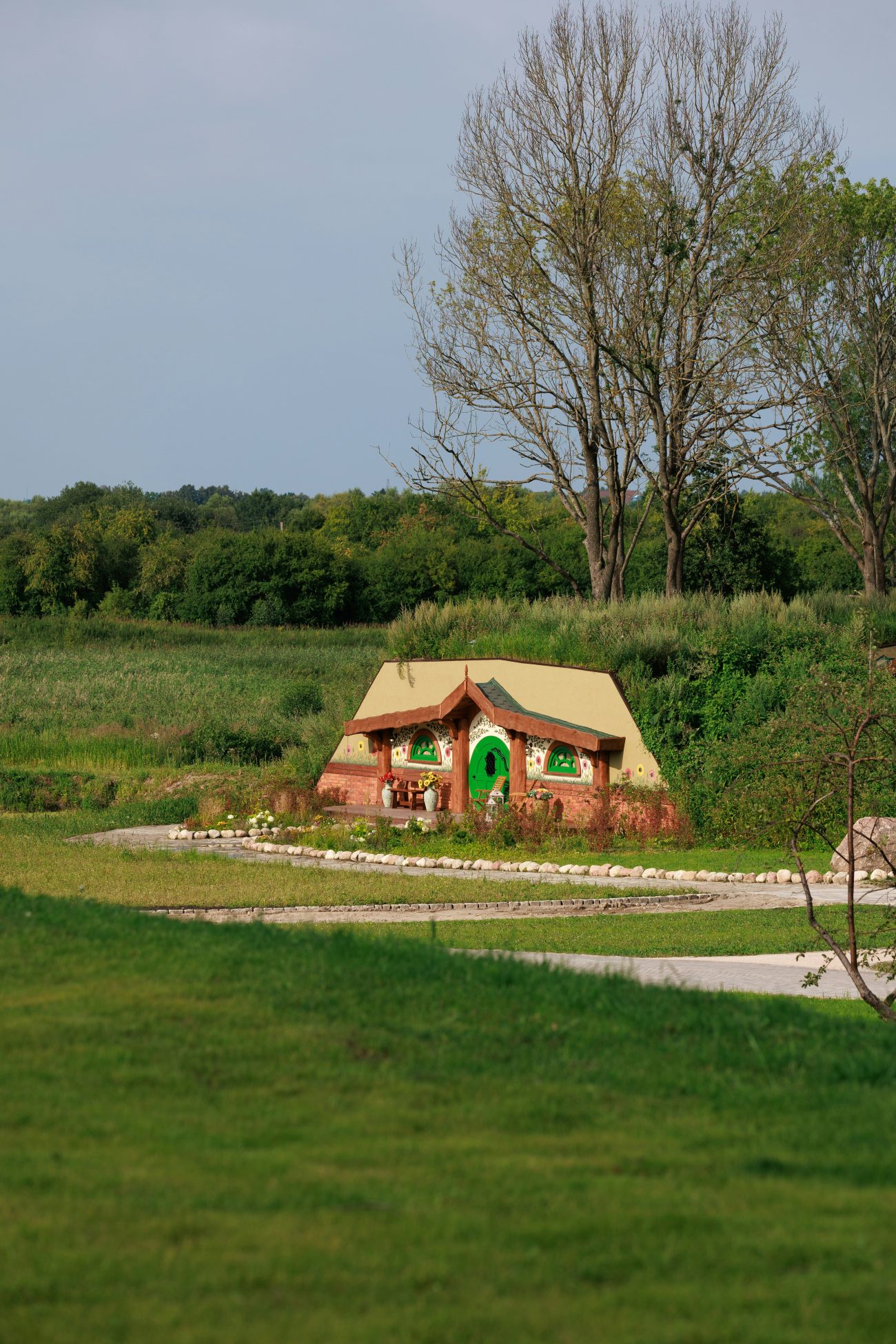
Earth-sheltered construction became one of the approaches explored during this period.
The concept was not entirely new. People had built homes into hillsides and used earth for insulation long before the modern energy-conscious movement.
What changed during the 1970s was the renewed interest in applying those principles to contemporary residential architecture.
Designers and homeowners experimented with buildings that were partially buried, covered with earth, or arranged around courtyards and landscaped roofs.
Some looked relatively conventional from the outside. Others, like Davis’s Illinois property, embraced a much more unusual appearance.
The goal was not necessarily to create a futuristic house.
It was to reconsider the relationship between a building and its surroundings.
Today, some of those ideas have become part of broader conversations about sustainable architecture, energy efficiency, and environmentally conscious construction.
However, an older earth-sheltered home should never be assumed to meet modern efficiency standards without proper evaluation.
The original design may have been ambitious, but its actual performance depends on the materials, construction methods, and condition of the building.
What Made This Property So Appealing to Unconventional Home Enthusiasts?
One reason unusual houses attract attention is that they offer something conventional properties rarely provide: a strong architectural identity.
The Armington residence has several features that make it memorable.
Its grass-covered roof gives it an almost hidden appearance. The natural stone creates visual texture, while the rounded windows and arches make the interior feel handcrafted rather than standardized.
For buyers who enjoy historic homes, unusual construction methods, or creative renovation projects, the property offered an opportunity to work with an existing design rather than begin with a blank building site.
Its layout also provided room for different possibilities.
A restored version could have remained a distinctive single-family home. The separate electrical meters mentioned in the listing also raised the possibility of exploring a multi-unit arrangement, subject to the necessary approvals.
Some observers even considered whether a property with such an unusual appearance could attract visitors as a short-term rental.
But possibilities should not be confused with guaranteed financial opportunities.
Any commercial or rental use would require careful research into local regulations, renovation costs, insurance, and the practical demands of operating such a property.
The strongest attraction was its individuality.
There are plenty of houses with conventional layouts and familiar finishes. There are far fewer with a roof that blends into the landscape and stonework that gives the interior the atmosphere of a handcrafted cave.
The Property Eventually Sold for $60,500
The unusual home attracted attention after it appeared on the real estate market in September 2026.
Its asking price was reported at $59,000, a figure that surprised many people considering its size and distinctive design.
But the low asking price also reflected the work needed to complete the property.
The house was not being offered as a fully renovated residence. Buyers had to consider the unfinished interior, mechanical systems, and other improvements required before the structure could become a comfortable finished home.
According to published transaction information, the property sold on October 29, 2026, for $60,500.
That means it is no longer simply an unusual house waiting for someone to make an offer.
Its sale marks another chapter in the story of a residence that began as an ambitious experiment in alternative construction nearly 50 years ago.
The final purchase price does not reveal how much the new owner may eventually invest in restoration. Nor does it establish the home’s future use.
Those details will depend on the condition of the building, the renovation plans, and the decisions made by its new owner.
Still, the sale demonstrates that unusual properties can attract interest even when they require substantial work.
