Posted in

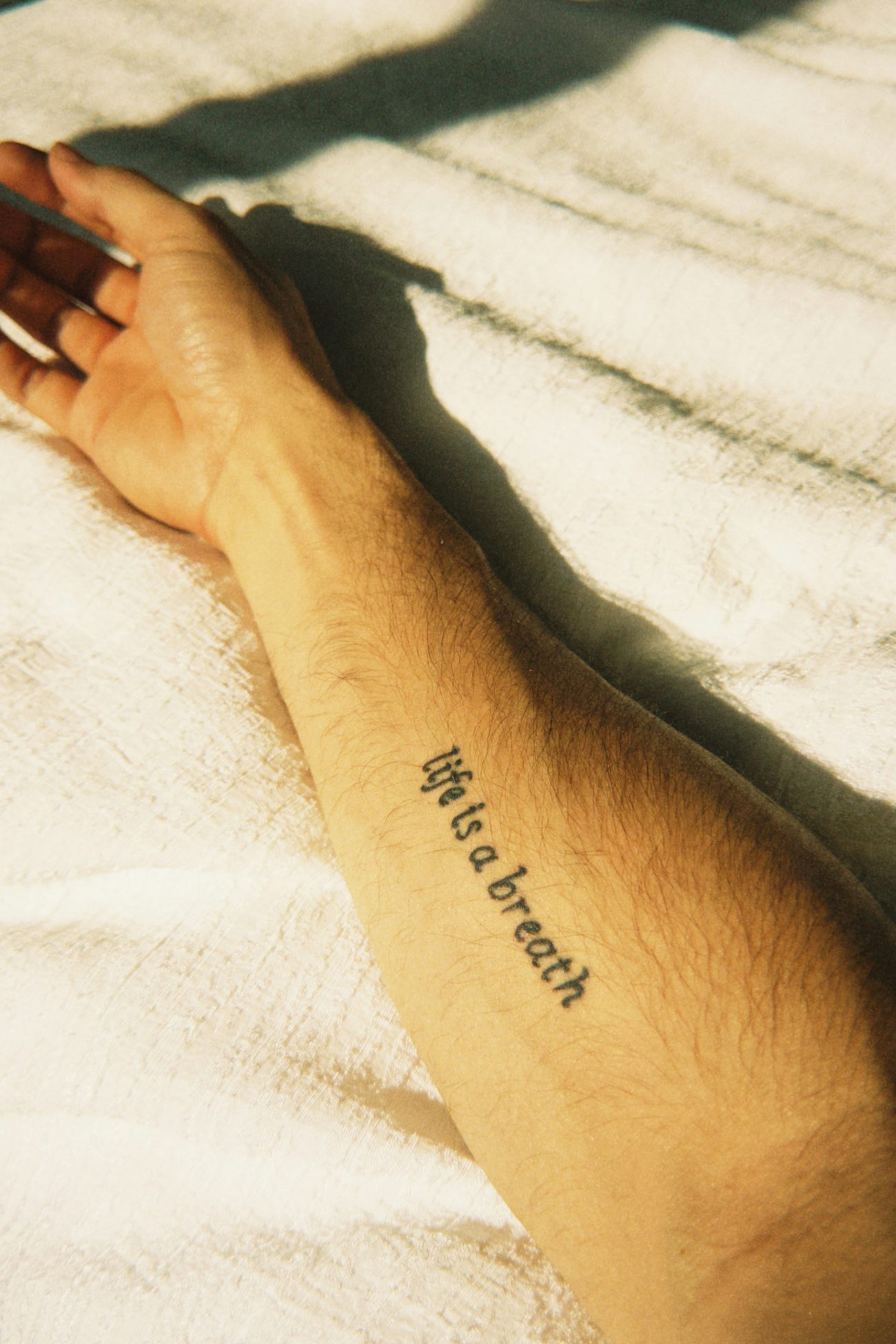
# The Unusual Tattoo That Had People Looking Twice: A Clever Twist on Ordinary Lettering Sometimes, the simplest images create the biggest questions. A photograph does not need elaborate artwork, bright colors, or a complicated subject to capture attention. An unusual arrangement of letters can be enough to make people stop scrolling, zoom in, and try to work out what they are seeing. That is the curiosity behind an unusual tattoo that attracted attention online. At first glance, its lettering appeared to be little more than a collection of disconnected words. The message was not immediately clear, and the arrangement seemed almost random. But the longer people studied it, the more they began to wonder whether the design contained a hidden message. Some viewers thought they understood it right away. Others needed to examine the lettering from a different angle or look at it several times before forming an interpretation. The appeal was not simply that the tattoo contained words. It was the way those words had been arranged to turn reading into a visual challenge. Although the exact intended message cannot be established from the description alone, the design illustrates an interesting idea: familiar letters can look completely different when they are presented in an unfamiliar pattern. It is a creative combination of typography, perception, and personal expression. ## Why the Tattoo Was So Difficult to Read at First Most text-based tattoos are designed to communicate a message as clearly as possible. A name, date, quotation, or short phrase is usually arranged in a way that allows someone to read it without much effort. This unusual design takes a different approach. Instead of presenting the words in a conventional line, the lettering appears to follow an arrangement that makes the message difficult to recognize immediately. Individual letters may be visible, but understanding how they connect requires a little more attention. That moment of uncertainty is what makes the design interesting. When people encounter an unfamiliar visual pattern, they naturally try to organize its elements into something recognizable. They may focus on one letter, move to another, or look for a familiar word hidden within the arrangement. Sometimes, changing the viewing angle makes a difference. In other cases, the viewer simply needs more time to recognize the pattern. The experience can be surprisingly satisfying. A design that initially appears confusing may suddenly make sense once the viewer discovers a possible way to read it. That small moment of recognition is a major part of the appeal of visual puzzles. ## The Psychology Behind Hidden Messages and Optical Illusions Human vision is not simply a matter of receiving images. The brain constantly organizes visual information, identifies patterns, and compares what it sees with things encountered before. This process is usually so quick that people rarely notice it happening. Reading provides a familiar example. When someone looks at an ordinary sentence, the brain recognizes letters, familiar combinations, and the structure of language. Most people do not need to consciously examine every character to understand a common word. Unusual lettering can interrupt that automatic process. When words are reversed, rotated, overlapped, arranged vertically, or placed in unexpected positions, the brain may have to work harder to interpret them. The viewer is no longer simply reading. They are trying to figure out how the design is meant to be understood. This is one reason optical illusions and visual puzzles attract so much attention. They create a difference between what people initially see and what they eventually recognize. ### Why people can interpret the same image differently Not everyone approaches a visual puzzle in the same way. One person might notice the overall arrangement first, while another concentrates on individual letters. Someone familiar with a particular lettering style may recognize a pattern more quickly than someone encountering it for the first time. The quality of the image can also affect interpretation. A photograph taken from an awkward angle, reduced in resolution, or displayed on a small screen may make certain details difficult to distinguish. For that reason, different interpretations of an online image should not automatically be treated as proof of its intended meaning. Without a clear view of the original tattoo or an explanation from the artist or wearer, some uncertainty may remain. ## How Typography Can Turn Ordinary Words Into a Visual Puzzle Typography is the art and technique of arranging letters and text. It influences how words look, how easily they can be read, and the impression they create. It is used everywhere, from book covers and advertisements to business logos, websites, posters, and product packaging. Although readability is important in most everyday typography, artists and designers sometimes use lettering in ways that deliberately challenge conventional reading habits. Words can be arranged in circles, reflected like mirror images, rotated, stacked, or combined into patterns. Letters may overlap or share parts of a design, creating an image that looks more like artwork than ordinary writing. A phrase might initially resemble a decorative symbol. Only after examining the individual elements does the viewer begin to recognize the words. This approach can make even a short message visually distinctive. ### Why the human body creates additional design challenges Tattoo lettering introduces another consideration: the surface on which the design will appear. Unlike a printed page or digital image, skin is not a flat, stationary canvas. The body has curves, contours, and areas that move whenever someone bends an arm, turns a shoulder, or changes position. A lettering design placed on an arm may look different depending on whether the arm is straight, bent, or rotated. A design on the shoulder or wrist may also need to be viewed from a particular angle to make its arrangement clear. Tattoo artists must consider these physical details when planning a design. For an optical or hidden-message tattoo, precision can be especially important. If the lettering depends on a particular alignment, even small changes in spacing or placement may affect the intended visual effect. The result is a form of body art that combines graphic design with the practical challenges of working on a three-dimensional surface. ## Why Visual Puzzles Become Popular on Social Media Social media encourages people to react, comment, share, and participate. That is one reason photographs containing unusual details or hidden patterns can generate so much discussion. A conventional photograph may attract attention because it shows something beautiful, surprising, or unusual. A visual puzzle offers something additional: an invitation to solve it. People may zoom in, compare interpretations, ask friends what they see, or return to the image after reading someone else’s explanation. That interaction can help a simple picture travel far beyond its original audience. Optical illusions are particularly effective because viewers do not always notice the same things at the same time. A hidden shape may be obvious to one person but difficult for another to identify. Unusual lettering can create a similar experience. When someone believes they have discovered the message, they may feel compelled to share the answer or challenge someone else to find it. However, online popularity does not necessarily establish that a particular interpretation is correct. Images are frequently reposted without their original context, and explanations can become separated from the artwork they describe. In the case of this tattoo, the visual arrangement is the main point of interest. Without a confirmed explanation from the person who created or wears it, claims about its exact meaning should be treated cautiously. ## Tattoos Are About More Than Their Appearance Although unusual lettering can attract attention because of its visual effect, tattoos have a much broader role in personal expression. For some people, a tattoo represents a family member, a relationship, or an important moment in their lives. Others choose a design to commemorate a personal achievement, remember someone they have lost, or express a belief that matters to them. Some simply appreciate the artistic qualities of tattooing. There is no single reason people choose permanent body art. A small symbol can carry enormous personal significance, while a large and elaborate design may be chosen primarily because the wearer enjoys its appearance. Text-based tattoos are particularly interesting because they combine language with visual design. A person might choose a favorite quotation, a line from a book, a family name, a date, or a phrase that has helped them through a difficult period. The words may be immediately understandable to everyone, or they may have a meaning known only to the person wearing them. An unusual lettering design can serve both purposes. It can attract attention as a piece of artwork while keeping its deeper meaning personal. That balance between public appearance and private significance is part of what makes text-based tattoos appealing. ## What to Consider Before Getting an Unusual Lettering Tattoo Creative lettering can look impressive, but anyone considering a similar design should think beyond its appearance in an online photograph. A tattoo is a long-term decision. The design needs to work not only in the moment but also as the skin and tattoo naturally change over time. Several practical considerations deserve attention. – **Readability:** If the tattoo is supposed to communicate specific words, make sure the lettering can be understood as intended. – **Placement:** Consider how the design will look on the natural curves of the chosen body area. – **Size:** Very small lettering may be difficult to distinguish, particularly when a design contains several words or intricate details. – **Spacing:** Letters placed too closely together can become harder to read as the tattoo ages. – **Style:** Choose a lettering style that suits the message and the overall design. – **Long-term appearance:** Ask the artist how the design may look as the tattoo naturally changes over the years. These details become especially important when the design relies on an optical effect. A hidden-message tattoo may require careful positioning so that the intended arrangement remains recognizable from the appropriate viewing angle. An experienced tattoo artist can help determine whether the idea will work on the selected area of the body. It is also worth seeing the proposed design on a realistic placement preview before committing to it. ## Why Understanding the Meaning Matters Before Getting Inked A design that looks clever or attractive online is not necessarily the right choice for everyone. This is particularly true when a tattoo contains words from another language, unfamiliar symbols, or lettering arranged in an unconventional way. A phrase may look appealing while carrying a meaning the wearer does not intend. Even a small spelling mistake can change the message. Before choosing a permanent text-based design, it is sensible to take a few precautions: 1. Confirm the exact wording and spelling. 2. Check the meaning with a reliable source, especially if the phrase comes from another language. 3. Ask the tattoo artist to prepare a clear version of the design. 4. Examine how the lettering looks from different angles. 5. Consider whether the message will still feel meaningful years later. It is also important not to rush into a decision simply because a design is attracting attention online. Trends change, but a tattoo is intended to last. The best design is one the wearer genuinely understands and feels comfortable having on their body. ## The Lasting Appeal of a Design That Makes People Look Twice There are many ways for a tattoo to stand out. Some designs attract attention through their size, color, or intricate detail. Others are memorable because of the personal story behind them. A hidden-message design introduces something different: discovery. Instead of understanding everything immediately, viewers are encouraged to examine the artwork, recognize patterns, and consider how the lettering might fit together. That creates a small interaction between the design and the person looking at it. The viewer notices something unusual, tries to interpret it, and may eventually arrive at a possible explanation. Even when people disagree about what they see, the artwork has encouraged them to engage with it. That is part of the broader appeal of optical illusions and creative typography. They remind us that familiar things can appear surprisingly different when presented in unfamiliar ways. The unusual tattoo is an example of how a simple arrangement of letters can become a conversation starter. Its appeal lies not only in the words themselves but also in the curiosity created by their presentation. **What do you think makes an unusual tattoo memorable: the message behind it, the creativity of the design, or the challenge of figuring out what it says?** ### Editorial Note The specific tattoo’s original image, creator, wearer, and intended message were not independently established in the material available for this article. The discussion therefore focuses on the general principles of creative lettering, visual perception, and tattoo design rather than presenting an unconfirmed interpretation as fact. ### Unsplash image search phrases – creative black lettering tattoo on skin – minimalist typography tattoo close-up – artistic handwritten text tattoo – optical illusion typography design **Recommended image alt text:** Close-up of an artistic lettering tattoo featuring an unusual arrangement of words on skin.

A hidden-message tattoo may require careful positioning so that the intended arrangement remains recognizable from the appropriate viewing angle. An experienced tattoo artist can help determine whether the idea will work on the selected area of the body.

It is also worth seeing the proposed design on a realistic placement preview before committing to it.

Why Understanding the Meaning Matters Before Getting Inked

A design that looks clever or attractive online is not necessarily the right choice for everyone.

This is particularly true when a tattoo contains words from another language, unfamiliar symbols, or lettering arranged in an unconventional way.

A phrase may look appealing while carrying a meaning the wearer does not intend. Even a small spelling mistake can change the message.

Before choosing a permanent text-based design, it is sensible to take a few precautions:

  1. Confirm the exact wording and spelling.
  2. Check the meaning with a reliable source, especially if the phrase comes from another language.
  3. Ask the tattoo artist to prepare a clear version of the design.
  4. Examine how the lettering looks from different angles.
  5. Consider whether the message will still feel meaningful years later.

It is also important not to rush into a decision simply because a design is attracting attention online. Trends change, but a tattoo is intended to last.

The best design is one the wearer genuinely understands and feels comfortable having on their body.

The Lasting Appeal of a Design That Makes People Look Twice

There are many ways for a tattoo to stand out. Some designs attract attention through their size, color, or intricate detail. Others are memorable because of the personal story behind them.

A hidden-message design introduces something different: discovery.

Instead of understanding everything immediately, viewers are encouraged to examine the artwork, recognize patterns, and consider how the lettering might fit together.

That creates a small interaction between the design and the person looking at it. The viewer notices something unusual, tries to interpret it, and may eventually arrive at a possible explanation.

Even when people disagree about what they see, the artwork has encouraged them to engage with it.

That is part of the broader appeal of optical illusions and creative typography. They remind us that familiar things can appear surprisingly different when presented in unfamiliar ways.

The unusual tattoo is an example of how a simple arrangement of letters can become a conversation starter. Its appeal lies not only in the words themselves but also in the curiosity created by their presentation.

What do you think makes an unusual tattoo memorable: the message behind it, the creativity of the design, or the challenge of figuring out what it says?

Editorial Note

The specific tattoo’s original image, creator, wearer, and intended message were not independently established in the material available for this article. The discussion therefore focuses on the general principles of creative lettering, visual perception, and tattoo design rather than presenting an unconfirmed interpretation as fact.

Unsplash image search phrases

  • creative black lettering tattoo on skin
  • minimalist typography tattoo close-up
  • artistic handwritten text tattoo
  • optical illusion typography design

Recommended image alt text: Close-up of an artistic lettering tattoo featuring an unusual arrangement of words on skin.

error: Content is protected !!