She had stood up for something important without allowing the experience to define her.
“I’m proud of you,” I told her.
She smiled.
“June said Grandma would have been proud too.”
“I agree with June.”
The Memories We Finally Learned to Share
That evening, Emily asked me a question while we were getting ready for bed.
“Mom, do you think Grandma would have liked my presentation?”
I sat beside her.
“She would have been incredibly proud. She probably would have cried happy tears.”
Emily smiled.
Then she asked whether we could talk about Grandma more often.
“Even if it makes us sad?”
I took her hand.
“Especially then.”
We spent the evening looking through old photographs from the cedar chest.
We remembered Grandma’s enormous glasses, her garden full of sunflowers, and her habit of singing while she cooked.
I told Emily stories about my childhood that I hadn’t shared in years.
Some memories made us laugh.
Others brought tears.
But this time, I didn’t change the subject.
A few days later, Emily hung the repaired dress at the front of her closet instead of hiding it beneath her winter coat.
She liked being able to see it whenever she opened the door.
The repaired seam remained visible, and she didn’t mind.
“It reminds me that June and I worked on it together,” she explained.
That weekend, I finally brought my mother’s photograph out of my bedroom.
For two years, I had kept it facing the wall because seeing her smile was too painful.
I turned it around and placed it back in the hallway.
Emily noticed immediately.
She stopped in front of it, smiled, and gently touched the frame.
In the spring, the three of us began visiting June regularly.
She continued teaching Emily to sew, and I slowly learned too.
We made small repairs, practiced embroidery, and occasionally attempted projects that were far beyond our abilities.
June never seemed to mind the mistakes.
She always said that learning required patience.
On what would have been my mother’s birthday, we visited her grave and planted sunflower seeds nearby.
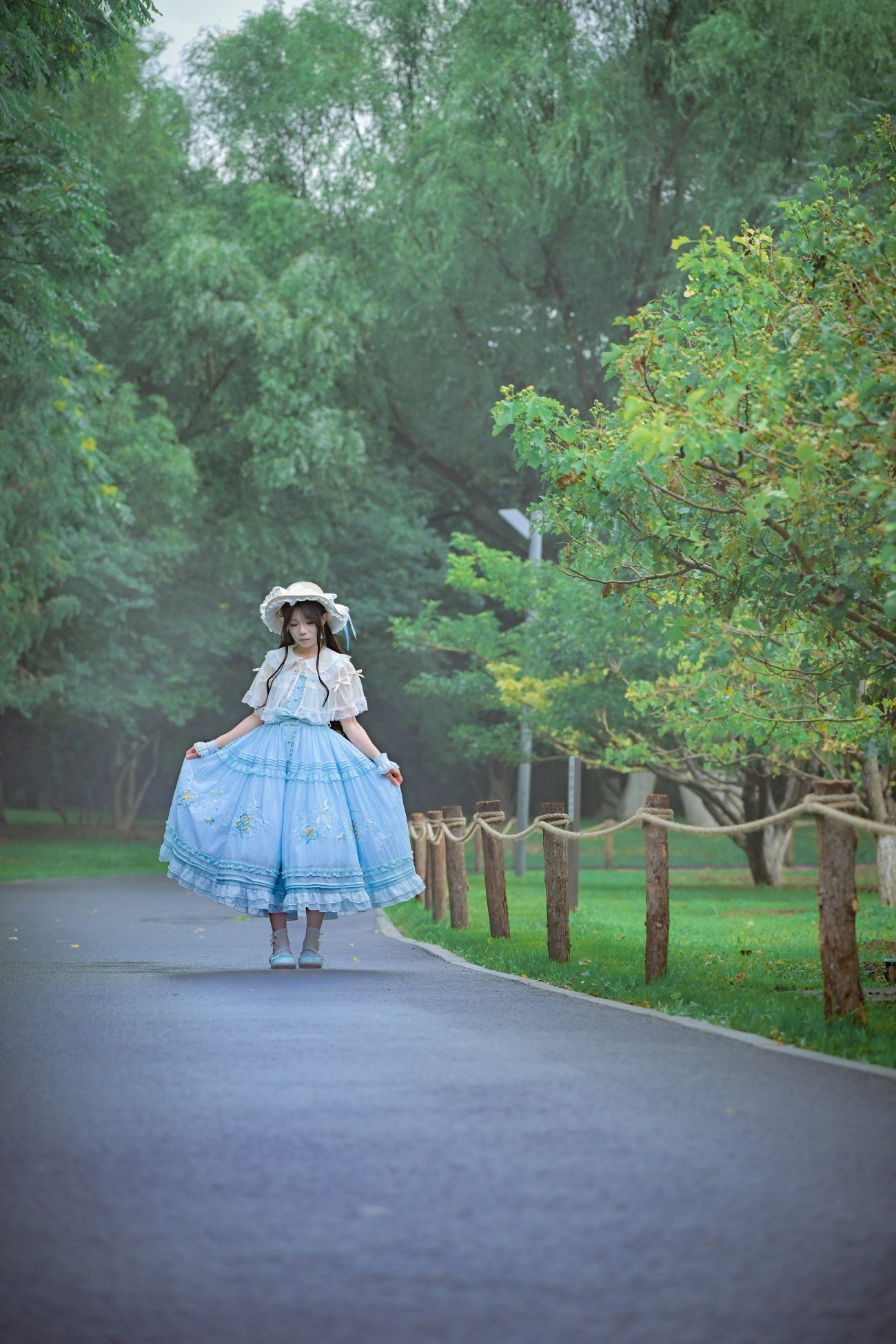
Emily wore the blue dress.
It was the first time she had worn it since the incident at school.
The repaired seam was visible, and the tiny embroidered flowers moved gently in the breeze.
Standing beside her grandmother’s resting place, Emily shared stories about her presentation, the sewing lessons, and everything she had learned.
June and I stood nearby, listening.
There were tears, but there was laughter too.
Later, Emily showed me the report her history teacher had graded.
She had received an excellent mark.
At the bottom of the page, she had written one final sentence:
The most meaningful things we inherit aren’t always the things that remain perfect.
I read those words several times.
They reminded me of something I had nearly forgotten.
When Principal Harris called that morning, I thought my responsibility was simply to protect my daughter and bring her home.
But the experience taught me something much deeper.
Emily didn’t only need help repairing an old dress.
She needed someone willing to listen to her feelings, share her memories, and understand why something that seemed ordinary to others meant so much to her.
The dress was repaired, and Emily returned to school.
But the most important change happened inside our home.
We began sharing stories about Grandma again. We brought her photographs back into view, baked her favorite recipes, and made room for both laughter and tears.
I finally understood that remembering someone we love doesn’t mean we must avoid sadness.
Sometimes, the best way to keep their memory alive is to talk about them, learn from them, and pass their stories to the next generation.
And every time I see that pale blue dress hanging in Emily’s closet, I remember the lesson my daughter taught me:
Some of the most precious things in life aren’t valuable because they remain untouched.
They’re valuable because of the love, memories, and people connected to them.
