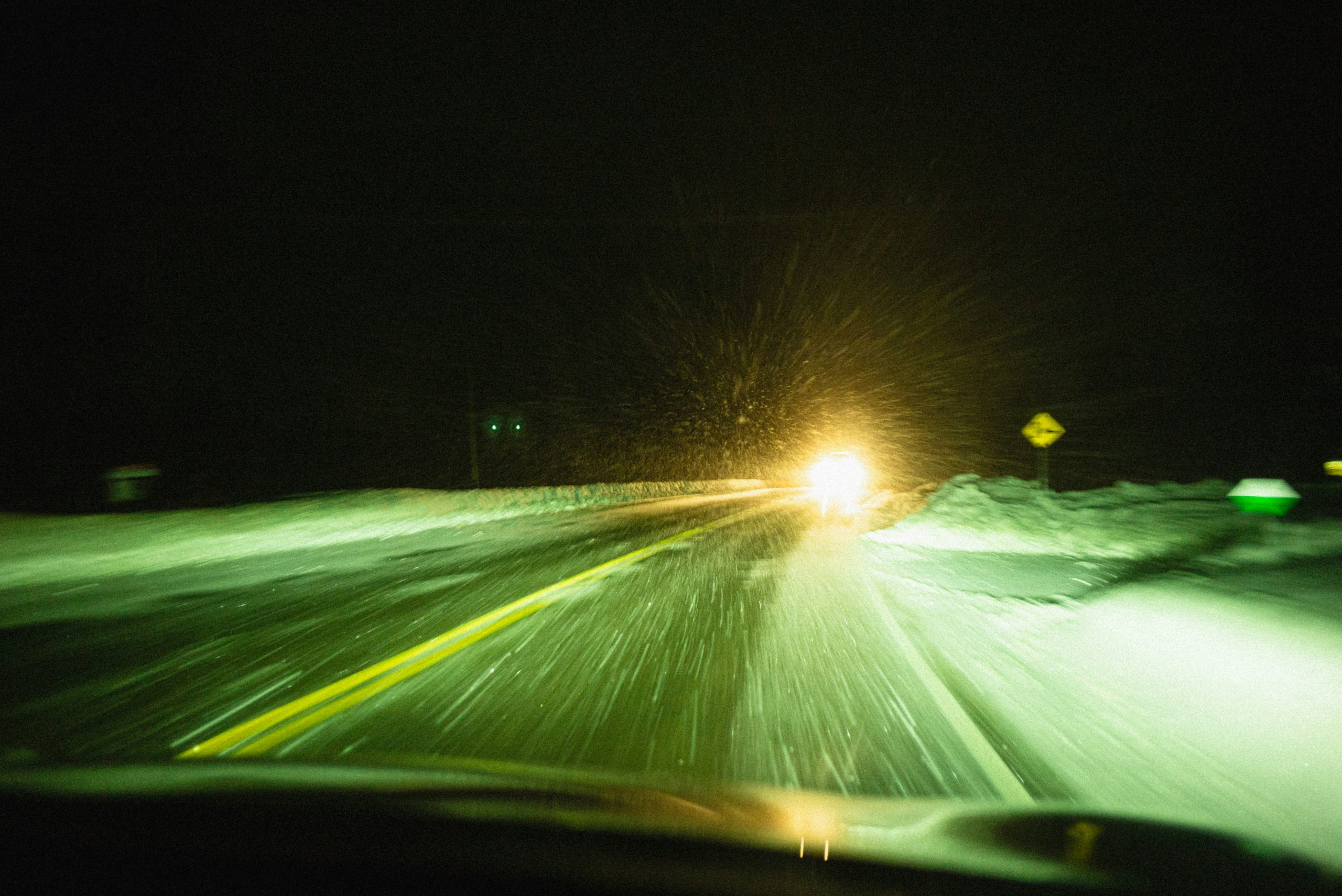
Even then, those privileges are generally subject to legal requirements and the responsibility to operate safely.
The distinction can matter enormously when someone is accused of failing to yield.
Without knowing the state, the vehicle’s authorization, the circumstances of the response, and the precise traffic law involved, it is impossible to determine whether the officer’s instruction was legally correct.
The fact that a vehicle displays green lights alone does not settle the question.
Why Drivers Should Never Make a Dangerous Maneuver
Another important point I discovered was that yielding to an approaching vehicle should never mean creating a new hazard.
Even when drivers encounter a clearly identified emergency vehicle, they should avoid sudden braking, unpredictable swerving, or moving into an unsafe space.
On a two-lane road, for example, there may be no shoulder wide enough to accommodate a vehicle. An intersection, parked cars, pedestrians, or oncoming traffic may also make an immediate maneuver dangerous.
The safest response depends on the road conditions and the applicable traffic rules.
Drivers should remain calm, observe their surroundings, and make room when they can do so safely. They should not assume that an unfamiliar warning light gives another driver permission to force them into an unsafe situation.
This is particularly relevant when the vehicle is not immediately recognizable as an authorized emergency vehicle.
Understanding what a light means is one thing. Knowing how to respond safely is another.
I Checked the Official Traffic Regulations
After reviewing the community comments and the dashcam footage, I decided to look at my state’s official traffic regulations.
I found the section dealing with volunteer emergency responders and authorized warning lights.
The wording was more complicated than I expected.
It addressed the use of certain lights and distinguished between permission to display them and the traffic privileges associated with different types of emergency vehicles.
That distinction helped explain why the comments in the community group were not entirely consistent.
Some people were describing what drivers commonly do when they see a volunteer firefighter approaching. Others were discussing what the law actually requires.
Those are not necessarily the same conversation.
The important lesson was that I needed to understand the specific state statute rather than rely on assumptions, online comments, or what someone had experienced elsewhere.
Because the location and exact legal provision are not identified in this account, no definitive conclusion can be drawn about whether I had violated a traffic rule.
I Called the Police Department the Next Morning
I still wanted an explanation from someone who understood the traffic regulations.
The next morning, I called the police department’s non-emergency number.
I explained that I had been stopped the previous day and wanted clarification about the green lights.
The person who answered transferred me to someone who could discuss traffic enforcement.
After a short wait, an officer came on the line.
I explained what had happened again.
“I was driving normally, and a vehicle with green lights approached from behind. I didn’t recognize it, and there were no sirens. Another officer pulled me over afterward and told me I should have yielded. I’m trying to understand what I was legally required to do.”
At that point, the conversation had only just begun.
The account provided does not include the officer’s response, so it would be unfair to invent an explanation or claim that the police department agreed or disagreed with the original stop.
But asking the question was reasonable.
When drivers are expected to recognize unfamiliar warning lights, they should also be able to find clear information about what those lights mean and what the law requires.
What Other Drivers Can Learn From This Experience
The incident highlights a practical problem that can arise when motorists encounter warning lights they have never seen before.
