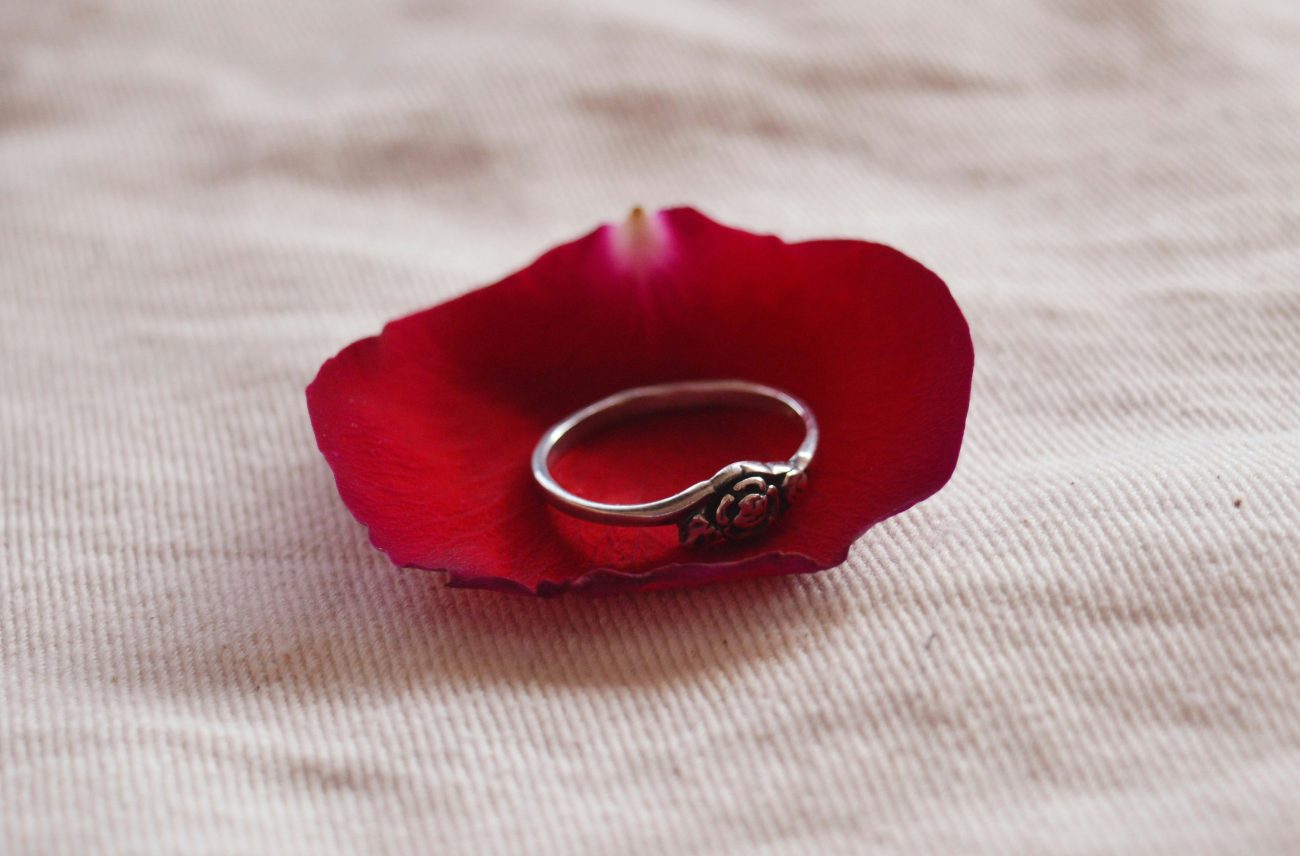
When I mentioned the dog, he gave a quiet laugh.
“Rooster,” he repeated.
“You always had terrible ideas about names.”
He looked at me, puzzled.
Then, for a moment, his smile widened.
“Belle,” he said again.
Edward watched from the other side of the room, visibly emotional.
I asked Benjamin whether he remembered buying the ring.
He turned it over in his hand.
“Eleven dollars,” he said slowly.
I froze.
“Yes,” I whispered. “Eleven dollars.”
He looked at the engraving.
“Had to pay extra.”
I laughed through my tears.
“You did.”
He looked pleased with himself, as though he had just completed an important task.
Then his expression became tired.
I understood that I could not ask for more than he was able to give.
I placed the photograph back inside the box and closed the lid.
Before leaving, I leaned forward and kissed his forehead.
“I’m glad you came home, Ben.”
He looked at me.
“Home?”
I nodded.
“Home.”
He did not answer, but his fingers briefly tightened around mine.
It was enough.
A Letter I Had Never Expected to Receive
Edward walked me back toward the entrance.
Before we left, he told me something he had not mentioned at the coffee shop.
After Dorothy passed away, Benjamin had become increasingly attached to the blue box. Edward had found him holding it on several occasions, sometimes looking at the photograph for long periods.
He had also discovered a folded piece of paper tucked beneath the yellow tissue.
It was another note in Benjamin’s handwriting.
Edward had not opened it before bringing the box to me. He believed it belonged to me.
I unfolded the paper carefully.
The handwriting was shaky and uneven, but the words were clear enough.
Belle,
I don’t know if I will remember everything tomorrow. Some days the past feels close, and other days I cannot find it.
But I know this ring belongs to us.
If you ever receive it, please know I never meant to leave you.
I tried to come home.
Ben.
I read it twice.
Then I folded the note and held it against my chest.
For sixty-two years, I had wondered whether Benjamin had forgotten me, whether he had changed his mind, or whether the promise beneath the willow tree had simply been something a young man said because he was leaving.
Now I knew.
He had tried to come home.
The war had taken his memories, his identity, and the life he had expected to return to. But somewhere inside him, something had remained.
The ring.
The photograph.
The name Belle.
And the promise.
What I Did With the Years That Remained
I began visiting Benjamin regularly.
Sometimes Wren came with me. Sometimes Edward met us there. On other days, I went alone and sat beside his chair while he looked through the photograph album.
I learned not to expect the same conversation twice.
Some afternoons he recognized me immediately. Other times, he greeted me politely and seemed unsure why I had come.
I stopped trying to force memories.
Instead, I brought red carnations.
I read him familiar passages from Charlotte’s Web, told him stories about the children at the hospital, and described the little yellow house where we had once imagined our future.
When he became tired, I simply sat beside him.
Edward and I also grew close. He told me about his mother, Dorothy, and the life she and Benjamin had built together.
I asked him to tell me everything he could remember about her.
He showed me photographs of their wedding, family holidays, and ordinary afternoons in their home. I could see that Benjamin had been loved.
