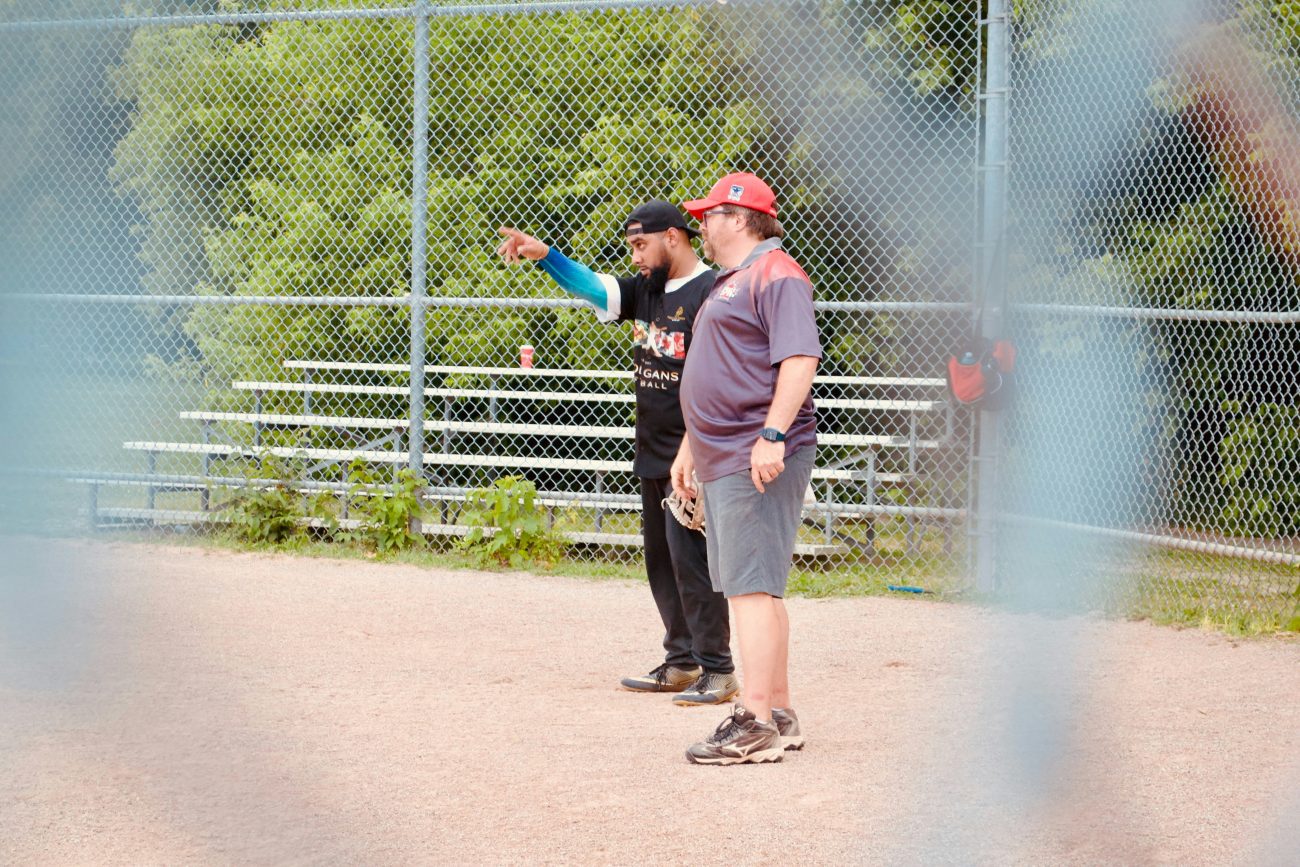
One Sunday, he came over for breakfast.
I made pancakes, Lucas’s favorite.
Daniel sat across from him while Lucas talked about an upcoming baseball game.
At one point, Lucas looked up.
“Are you coming next Saturday?”
Daniel stopped eating.
“To your game?”
“Yeah. It’s at ten.”
“I’d like that,” Daniel said. “If you want me there.”
Lucas shrugged, trying to appear casual.
“Okay. You can sit with Grandma.”
I smiled into my coffee.
It was a small invitation, but it meant something.
After breakfast, Daniel helped Lucas carry his baseball equipment to the car.
Before leaving, he turned toward me.
“Thank you for raising him.”
I looked at the man who had once stood in a hospital corridor and walked away.
“Don’t thank me yet,” I said. “Show him you mean it.”
He nodded.
“I will.”
I didn’t know whether he would keep that promise. I had learned not to confuse a person’s words with proof of their character.
But I was willing to let Lucas discover who his father was through his own experiences, provided Daniel continued to show up.
What I Finally Understood About My Daughter’s Letter
Later that afternoon, Lucas placed the old photograph on the kitchen counter.
He studied it for a moment.
“Grandma?”
“Yes?”
“Do you think Mom knew we’d find him someday?”
I looked at Teagan’s handwriting on the back.
Lucas, the first person who wanted to hold you was your father.
“I think your mom wanted you to know the truth,” I said. “And I think she wanted you to have the chance to make your own decision about him.”
Lucas nodded.
Then he picked up the photograph and carried it to his room.
That evening, I sat alone at the kitchen table and read Teagan’s letter one more time.
For ten years, I had believed I was protecting Lucas by keeping the story simple.
His father had left. We had each other. That was enough.
But children deserve more than a convenient explanation. They deserve the truth, given with care and at the right time.
Daniel could never give Lucas back the years he had missed. He couldn’t become the father who had been there for every scraped knee, every school performance, and every birthday.
That part of their story was gone.
But he could decide what happened next.
The following Saturday, Daniel arrived at the baseball field fifteen minutes before the game.
He sat beside me in the stands, just as Lucas had requested.
When Lucas spotted us, he raised his glove and waved.
Daniel waved back.
I looked toward the field and thought about Teagan.
I wished she could have seen her son. I wished she could have watched him grow, heard his laughter, and sat beside us that morning.
But I also knew that the past could not be changed by wishing.
All we could do was make better decisions from that point forward.
Lucas still called me Grandma. He still came to my room when he had a bad dream. He still expected pancakes every Sunday.
And now, sometimes, he asked whether his father was coming over.
I didn’t know what their relationship would become.
I didn’t know whether Daniel would remain consistent as Lucas grew older, or whether the two of them would eventually develop the kind of bond they had missed during the first ten years.
I couldn’t promise Lucas that everything would work out.
But I could promise him that he would never have to earn anyone’s love by accepting blame for another person’s choices.
One afternoon, as we were leaving the baseball field, Lucas slipped his hand into mine.
