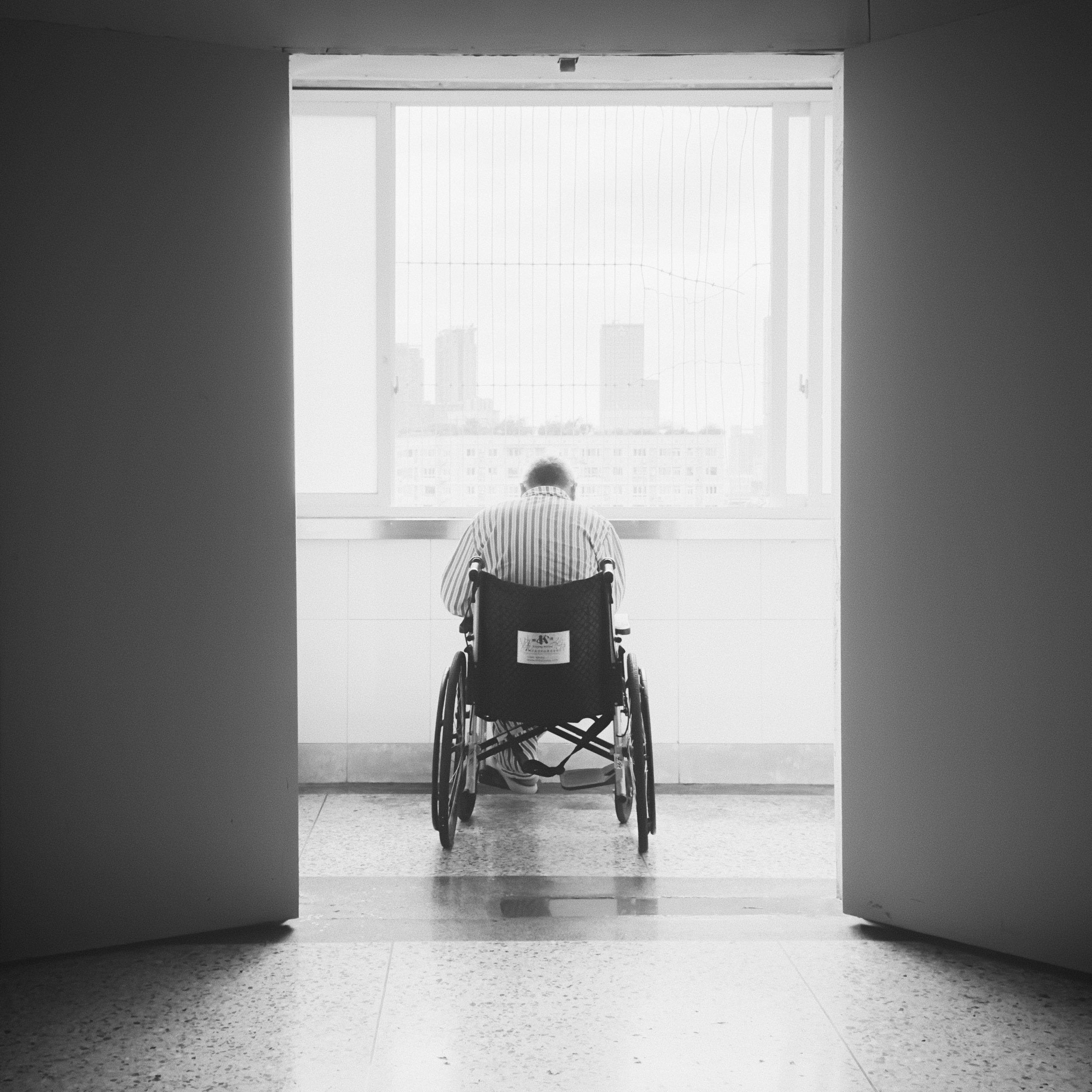
“Marry me, Sarah.”
I froze.
“Thomas…”
“I know,” he said gently.
“You are very ill.”
“Yes.”
“We barely know each other.”
He looked at me for a long moment.
“I know enough.”
“Enough for a marriage?”
“Enough to recognize that you’re the sort of person who stays. I don’t want my final days to end as an anonymous file in a hospital.”
His words stayed with me.
I knew how unusual the request was. Thomas was old enough to be my grandfather, and we had known each other for only a short time.
But I also understood what he was asking.
He wasn’t promising me a future together. He was asking not to face the end of his life entirely alone.
Two days later, a hospital chaplain married us in his room.
I wore a yellow sweater because Thomas had once told me it made the room look less gloomy. He wore his familiar cardigan, which was missing a button.
When the chaplain asked about rings, Thomas picked up a soda can and carefully removed its pull tab.
He slipped it onto my finger.
It was much too large.
“We’ll pretend your finger is shy,” he whispered.
I laughed, and so did he.
For seven days, I was his wife.
I signed the necessary paperwork, brought him better tea, and sat beside him when his breathing became shallow. Sometimes we talked. Sometimes we simply shared the silence.
Near the end, he opened his eyes and said something I didn’t understand.
“Don’t mistake stillness for peace.”
“What does that mean?” I asked.
His smile was faint.
“You’ll understand.”
Then he closed his eyes.
He never woke again.
The Green Backpack and the First Clue
After Thomas died, his attorney handed me the backpack.
The hospital room felt strangely empty. His pillow still held the impression of his head, and his peppermint tea remained untouched on the bedside table.
The little metal ring was still on my finger.
The attorney stood beside the bed, holding the backpack strap.
“Sarah, Thomas wasn’t quite the man you believed him to be.”
I looked at him.
“What truth are you talking about?”
“He thought you would understand better if you opened it yourself.”
Then he left.
I took the backpack home and placed it on my kitchen table. For nearly two hours, I walked around it without opening it again.
When I finally unzipped it, I found no money, jewelry, or legal documents.
Only envelopes.
Each one carried a location, written in Thomas’s handwriting.
The first was Bus Stop.
Inside was an old train ticket with the words “She finally left” written on the reverse.
The Grocery Store envelope contained a receipt for two cans of tomato soup and a loaf of bread.
On the back, Thomas had written:
“She accepted the soup.”
The Park Bench envelope held a faded Polaroid of Thomas sitting beside a man in a brown coat.
Beneath the photograph were the words:
“He smiled before my departure.”
I opened more envelopes.
One contained a child’s crayon drawing. Another held a coffee receipt. A folded napkin carried a telephone number that had been crossed out.
None of the items seemed particularly valuable.
But each one appeared to preserve a moment that Thomas didn’t want to forget.
Then I opened the envelope marked Waiting Room.
Inside was an old hospital visitor sticker.
On the back, he had written:
“She said her mother’s laugh sounded like she was trying not to.”
I stopped breathing for a moment.
That was me.
The Question He Had Never Forgotten
When Thomas and I first met, he had asked me about my mother.
