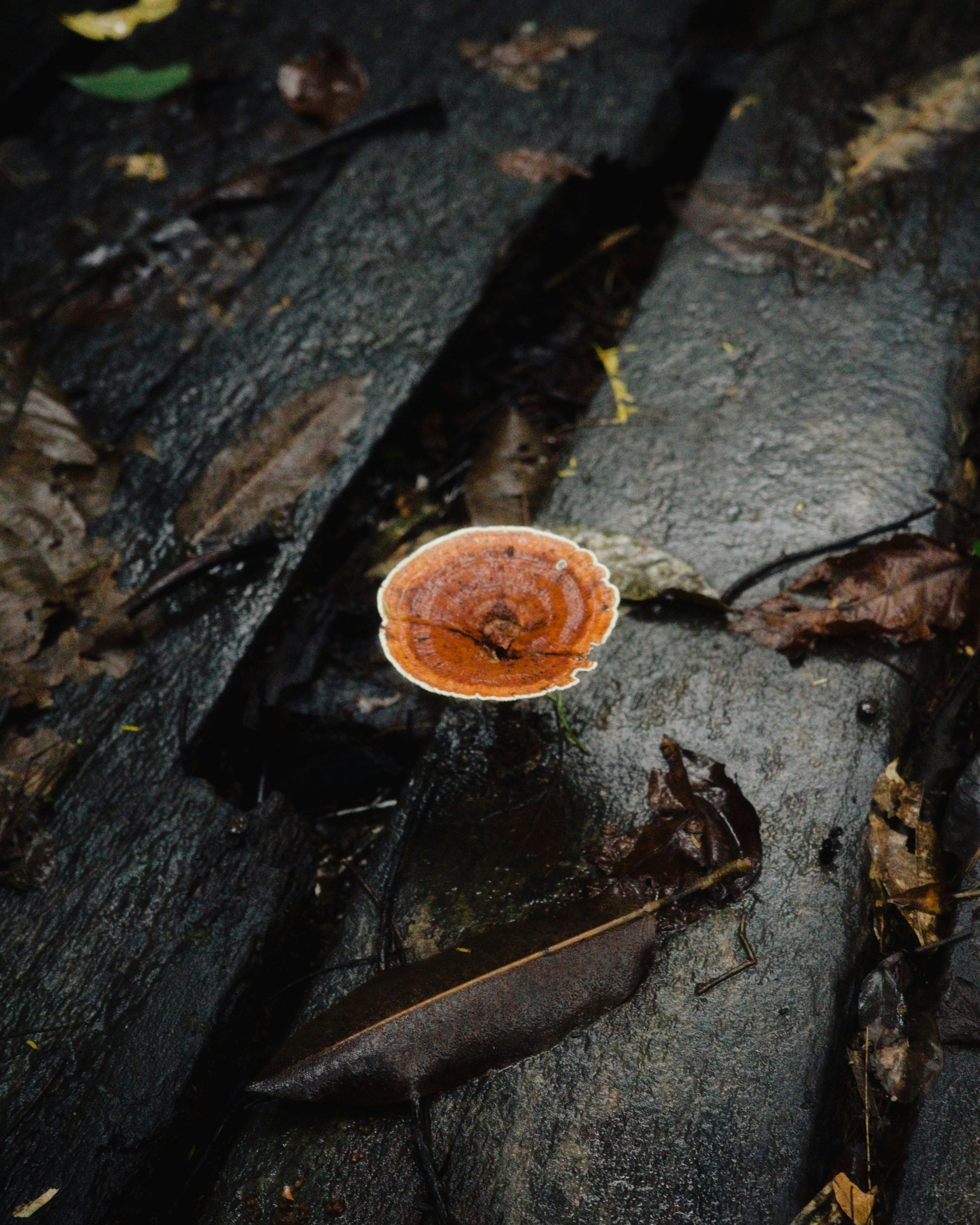
Curiosity Over Assumption
Curiosity plays an important role in how we interpret the world around us.
When faced with something unfamiliar, it is easy to rely on assumption—deciding quickly what something might be without knowing the facts. But curiosity encourages a different approach.
Instead of asking “What is this, and should I be worried?” curiosity asks, “What is this, and how does it live?”
This shift in thinking transforms moments of uncertainty into opportunities for learning. Over time, repeated experiences like this build confidence and reduce unnecessary hesitation around the unknown.
What once felt strange becomes familiar. What once felt unsettling becomes interesting.
Respecting Nature Through Distance
While curiosity is valuable, it should always be paired with respect.
Wild creatures, no matter how small or seemingly harmless, should not be touched or disturbed in their natural environment. Interaction can cause stress to the organism and may disrupt its natural behavior.
A better approach is simple observation from a safe distance. If interest remains, taking photographs or making notes allows for further learning without interference.
Respecting this boundary ensures that both the observer and the natural environment remain unharmed.
Discoveries Close to Home
One of the most overlooked aspects of nature is how close it actually is.
Many people associate discovery with remote forests or distant landscapes, but meaningful encounters often happen much closer to home. Gardens, sidewalks, parks, and local trails are filled with unnoticed life.
By slowing down and paying attention, small details begin to stand out. Patterns in plant growth, insect activity, and soil movement all become part of a larger picture.
These everyday observations can quietly deepen our understanding of the natural world without requiring any special setting or equipment.
Learning Through Everyday Encounters
Encounters with unfamiliar creatures can also serve as valuable educational moments, especially for children and learners of all ages.
They offer a chance to explore topics like biology, ecosystems, adaptation, and environmental balance in a direct and memorable way.
Simple activities—such as identifying species, observing behavior, or researching what has been seen—can turn curiosity into lasting knowledge.
More importantly, these experiences encourage respect for nature rather than fear of it.
Changing the Way We See the Unknown
The way we respond to unfamiliar experiences often reflects how we approach life in general.
When we respond with fear, we limit understanding. When we respond with curiosity, we open the door to learning.
This shift in perspective does not only apply to nature. It can influence how we approach new people, new situations, and unfamiliar ideas in everyday life.
What once felt uncertain can become meaningful when approached with patience and openness.
Final Thoughts
Encounters with unfamiliar creatures are a natural and often overlooked part of everyday life.
At first, they may create hesitation or surprise. But with a moment of patience and observation, they often reveal something far more interesting than expected.
Creatures like the Red Triangle Slug remind us that nature is full of quiet diversity—life that exists all around us, often unnoticed until we take the time to look more closely.
In the end, understanding does not begin with knowledge alone. It begins with a simple choice: to pause, to observe, and to remain open to what we do not yet know.
And in that choice, even the smallest encounter can become a meaningful step toward seeing the world with greater awareness and appreciation.
