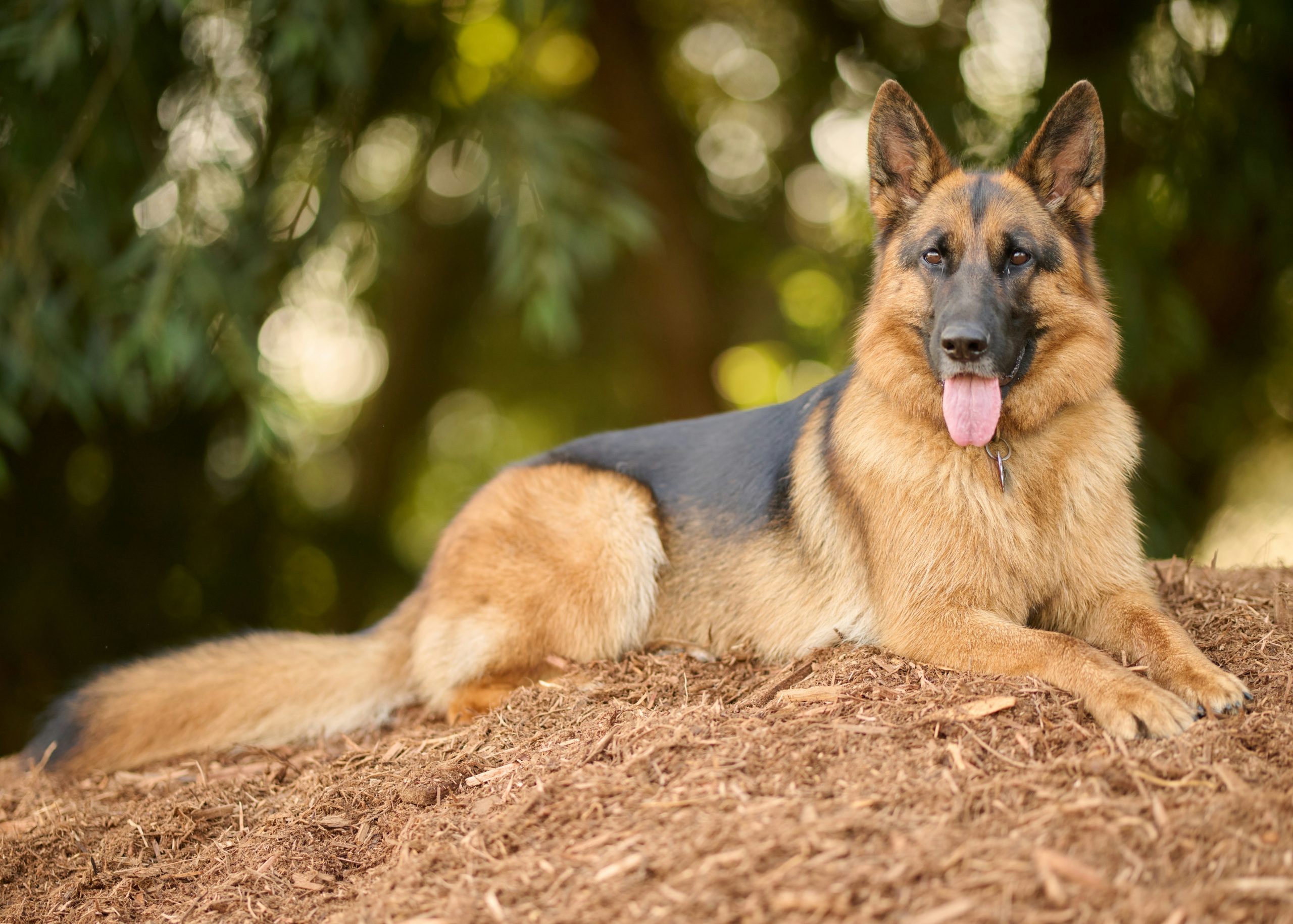
German Shepherds have a long history of working alongside law enforcement and other professional organizations.
Their trainability, athleticism, attentiveness, and ability to learn complex tasks have made them suitable for a variety of working roles.
Depending on their training and the policies of the agency, police dogs may assist with activities such as tracking people, searching for missing individuals, detecting particular substances, or supporting certain operational tasks.
Not every police dog performs every function. Responsibilities depend on the dog’s training, the handler’s qualifications, and the requirements of the organization.
A dog’s suitability for police work also depends on more than breed alone.
Temperament, health, confidence, motivation, and individual behavior are important considerations. Professional trainers evaluate whether a dog can safely and reliably perform the tasks expected of it.
Training does not eliminate every risk. Dogs remain living animals with physical needs and behavioral limits, which means their welfare must be considered throughout their working lives.
Responsible handlers must balance operational responsibilities with appropriate exercise, rest, veterinary care, and positive training practices.
These requirements are part of what makes the handler’s role so important.
The Emotional Impact of Separation
For many people, the thought of being separated from a beloved dog is difficult to imagine.
Dogs become part of household routines. They greet familiar people, respond to daily habits, and provide companionship through ordinary moments that may seem unimportant until circumstances change.
For a working K9 team, the relationship can be shaped by additional experiences.
The handler and dog may train together regularly, travel to different locations, and work in environments that demand concentration and coordination.
They may also share quiet periods between assignments, during which the dog rests and the handler attends to routine responsibilities.
Over time, these repeated experiences can create a powerful sense of familiarity.
If the partnership ends because of retirement, reassignment, illness, or other circumstances, both the practical arrangements and the emotional adjustment can require careful consideration.
When a handler faces legal consequences or a major change in personal circumstances, the future of the working relationship may become especially uncertain.
However, the specific arrangements for a police dog depend on agency policy, ownership rules, retirement procedures, and the dog’s welfare needs. It would be inappropriate to assume that a former handler automatically retains custody or that a separation will necessarily be permanent.
The best outcome is one that considers the dog’s health, established relationships, safety, and long-term care.
What Happens When a Police Dog Retires?
Police dogs do not generally continue working indefinitely.
Like other working animals, they may eventually experience age-related changes, health problems, or reduced ability to perform demanding tasks.
When a dog retires, its future care depends on the policies of the relevant agency and the circumstances of the individual animal.
In some cases, the handler may be eligible to adopt the dog, allowing the pair to remain together after active service. Other arrangements may involve another qualified caregiver or an appropriate placement determined by the agency.
Retirement planning can require attention to veterinary care, exercise, changes in daily routine, and the dog’s ability to adapt to life outside operational work.
A dog that has spent years following a structured working schedule may need time to adjust to a quieter environment.
The handler may also need to learn how to meet the dog’s changing needs as it ages.
Keeping a retired K9 with a familiar handler can offer continuity when it is practical and appropriate. However, the dog’s welfare should remain central to any decision.
