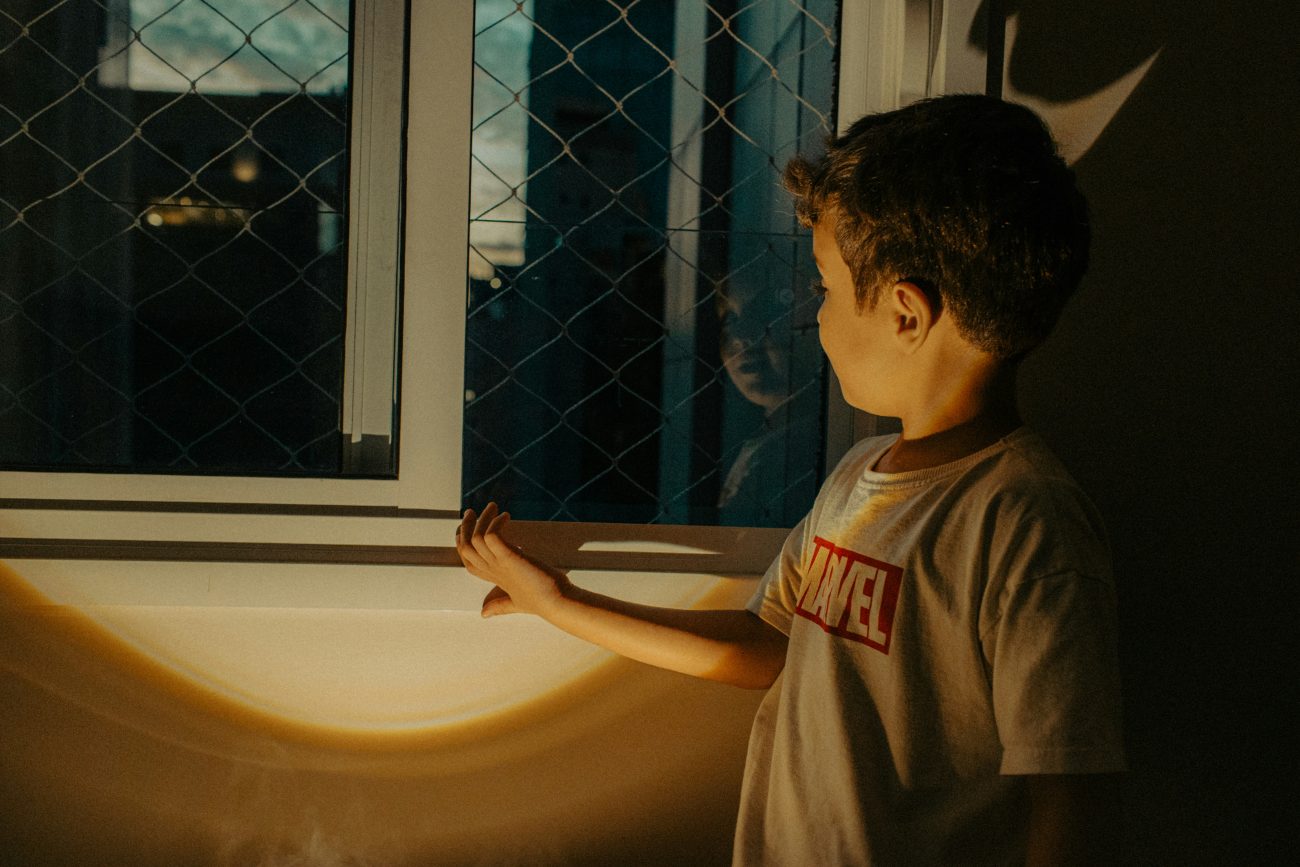
There was no television playing, no adult moving around in another room, and no sign that anyone had checked on him.
“Have you eaten today?” Lena asked.
Eli nodded.
“I had crackers.”
“What about yesterday?”
“Crackers and cereal.”
“Did you have any milk?”
He shook his head.
“It smelled funny, so I didn’t drink it.”
Lena glanced toward the refrigerator. She understood that the boy had been trying to make decisions far beyond what a seven-year-old should have to handle.
“You did the right thing,” she told him. “I’m glad you didn’t drink it.”
Eli looked toward the front door.
“Is Mommy coming with you?”
Lena paused before answering.
“I’m going to help find out where she is.”
He hugged his dinosaur closer.
“She always comes home.”
Lena had heard children ask difficult questions before. But there was something especially painful about the certainty in his voice. He wasn’t angry with his mother. He wasn’t accusing her of leaving.
He was still waiting for her.
Four Days of Waiting
While another officer arranged for medical assistance, Lena sat beside Eli on the couch.
She didn’t want to overwhelm him with questions, so she let him tell the story at his own pace.
He explained that his mother, Teresa, had been worried because he was sick. He had been coughing, running a fever, and feeling too weak to play outside.
Teresa had been giving him medicine, but the bottle was almost empty.
That morning, she told him she needed to go to the pharmacy and buy groceries.
“She said thirty minutes,” Eli repeated.
“Do you remember what day that was?” Lena asked.
He shook his head.
“I don’t know the days very good.”
“That’s all right. What happened after she left?”
“I watched cartoons. Then it got dark.”
“What did you do when it got dark?”
“I turned on the porch light so Mommy could see the house.”
Lena glanced toward the window.
The porch light was still on.
“The next morning, I thought maybe she came home while I was sleeping,” Eli continued. “But she didn’t.”
He had looked in her bedroom. He had checked the kitchen. He had stood near the front window and watched the street.
When the second day passed, he began to worry.
By the third day, he was running out of food.
But he still didn’t call for help.
“Why didn’t you call someone sooner?” Lena asked gently.
Eli looked down at his hands.
“Mommy told me not to call 911 unless it was a real emergency.”
He seemed embarrassed.
“I thought maybe I was just being scared.”
Lena reached for his hand.
“You were scared because something was wrong. And you were right to ask for help.”
Eli nodded, but his expression remained troubled.
Then he pointed toward the kitchen.
“I saved some crackers for Mommy.”
Lena followed his finger.
On the table was a small plate. Four crackers had been arranged neatly in a row, with a folded paper napkin beside them.
Written across the napkin in uneven letters were two words:
For Mommy.
Lena looked at the plate for a long moment.
The child had been hungry, frightened, and alone. Yet he had saved part of what little food he had because he believed his mother would return.
“That’s very thoughtful of you,” she said quietly.
Eli looked at the plate.
“She might be hungry when she gets home.”
Lena had to turn her face away for a moment before answering.
The Clues Teresa Left Behind
After paramedics checked Eli, Lena began looking around the house for information that might explain Teresa’s disappearance.
