My Father-in-Law Sold the Family Farm for $286,000 Because His Son Married a “Town Girl.” Four Years Later, I Raised Bidder Card 47.
The first time my father-in-law called me a “town girl,” he said it as though he were explaining a serious mistake his son had made.
I was standing in the kitchen of the white farmhouse, holding a dish towel and trying to understand why a conversation about planting season had suddenly become a judgment about my entire life.
“You wouldn’t understand what this place means,” Walt said. “You grew up in town.”
My husband, Luke, looked down at his coffee.
He didn’t argue with his father that morning. He didn’t defend me, either. But when we drove home, he reached across the console and took my hand.
“I’m sorry,” he said.
I squeezed his fingers. “You don’t have to apologize for where I grew up.”
What neither of us knew then was that those words would become part of a much longer story—one involving eighty acres of farmland, four years of Saturday shifts, a public auction, and a bidder card with the number 47.
And eventually, a price of $286,000.
The Farm That Had Always Been Home
Luke had grown up on that farm.
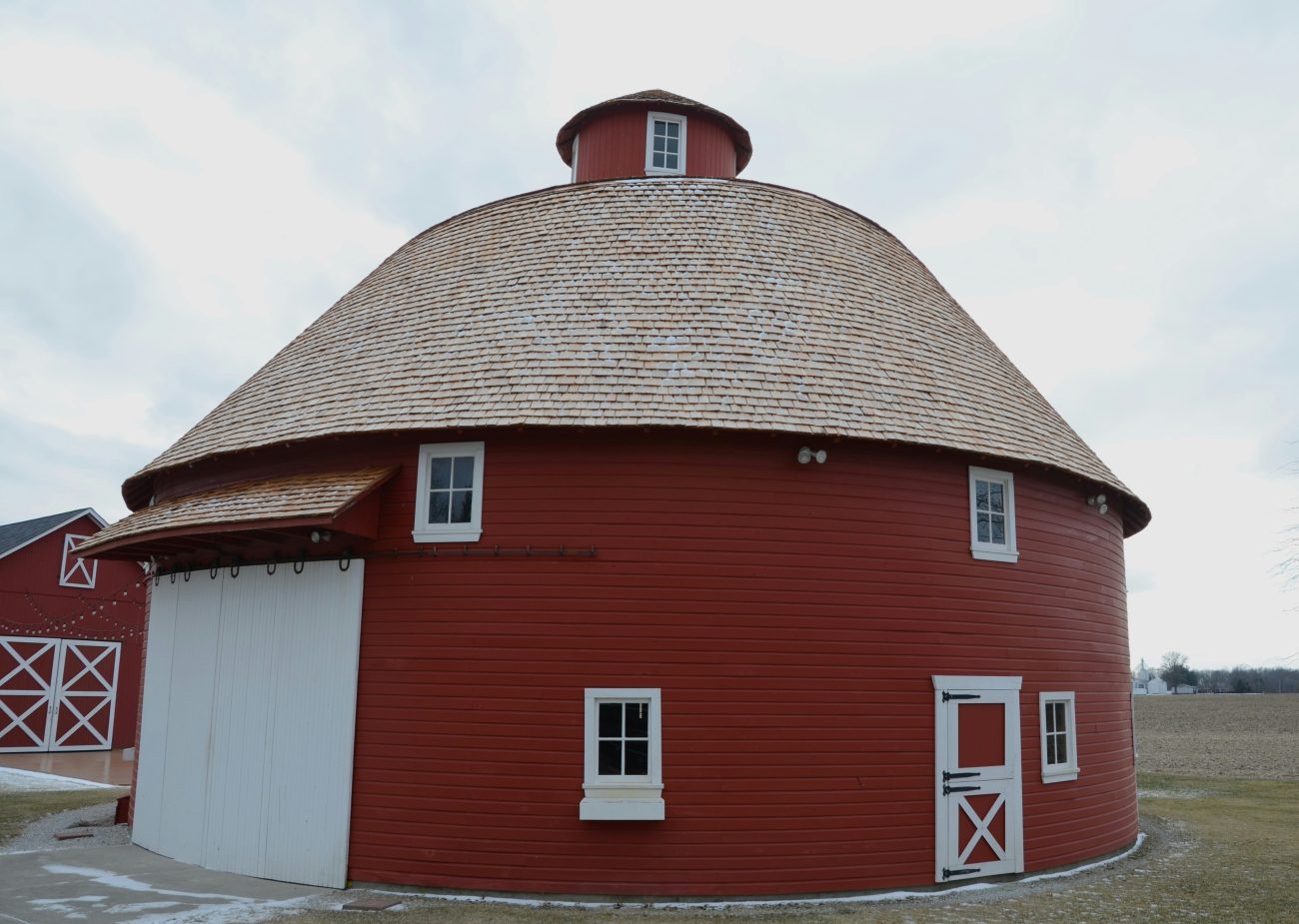
The property had been in his family for generations. It covered eighty acres, with open fields stretching beyond the red barn and a white farmhouse that stood near the gravel driveway. There were old trees around the house, a working yard, and enough land to make every season feel different.
For Luke, the farm was never simply a piece of real estate.
It was where he learned to drive a tractor, where he spent summer mornings helping with chores, and where his memories of childhood seemed to live in every corner.
He remembered the sound of the barn doors sliding open. He remembered his mother calling everyone inside when dinner was ready. He remembered his grandfather showing him how to recognize when the soil was ready for planting.
Walt had inherited the property and continued managing it. He was proud of the farm and expected his son to understand its importance without needing it explained.
Luke did understand.
But he also wanted a life that included more than the farm.
He and I met as adults, and our relationship developed naturally. I worked as a dental hygienist. I had grown up in town, in a family that valued steady work, education, and financial responsibility. I knew how to work hard, but I had never spent my childhood raising animals or repairing farm equipment.
Luke never treated that difference as a problem.
He liked that I had my own career. I admired his connection to the land. We built our marriage around the belief that two people could come from different backgrounds and still create a life together.
Walt saw things differently.
He had imagined his son marrying someone who already understood farm life. Someone who would naturally fit into the routines and expectations of the property.
Instead, Luke married me.
And from the beginning, Walt seemed to believe that his son had chosen a different future because I had pulled him away from the one he was supposed to inherit.
When the Farm Became a Point of Conflict
At first, Walt’s comments were small enough to dismiss.
He would ask whether I knew how to drive a tractor, then laugh when I admitted I had never tried. He would tell Luke that certain jobs needed to be done by people who understood the land. If I offered to help, he sometimes found a reason to give the task to someone else.
