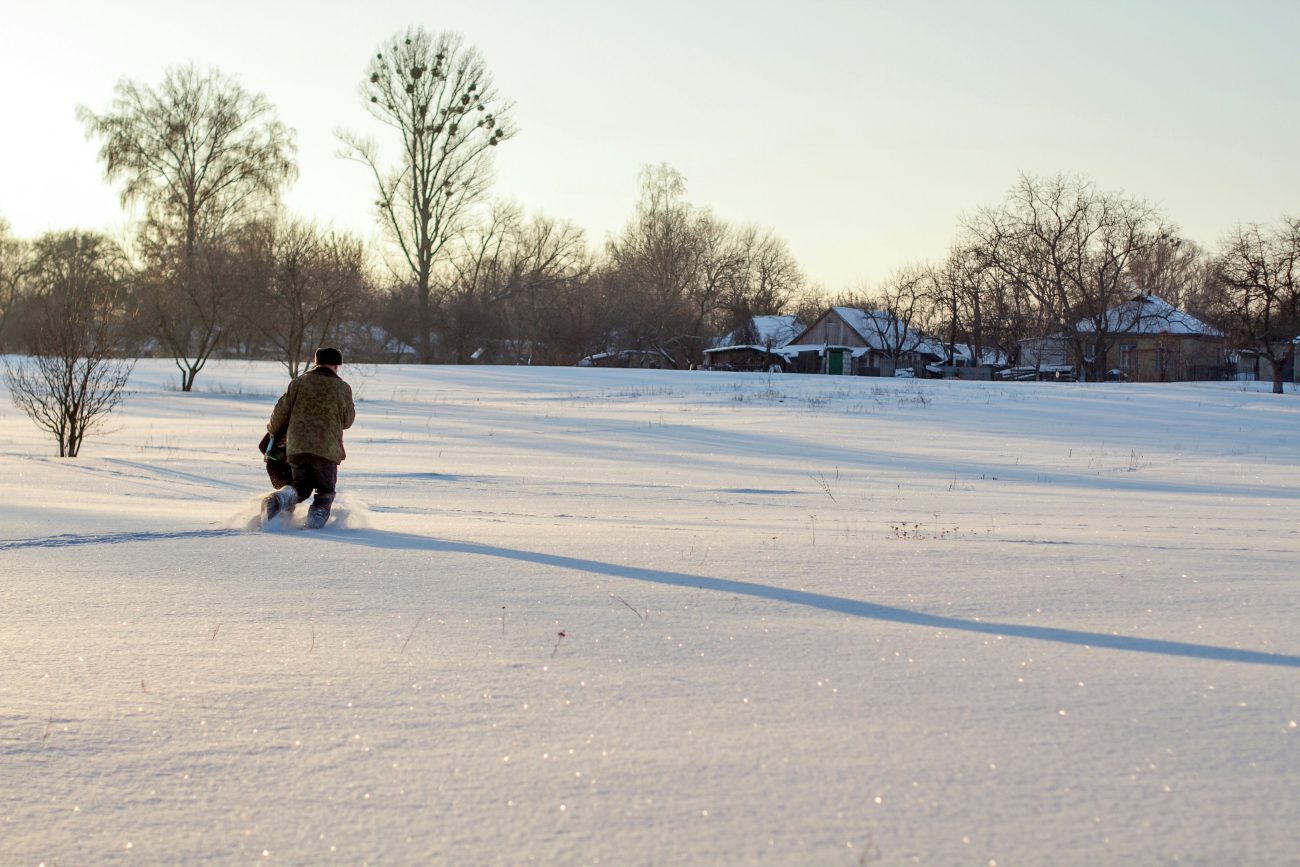
Snowy Tracks That Don’t Quite Add Up: Can You Spot the Detail That Doesn’t Make Sense?
A fresh blanket of snow can turn an ordinary winter walk into a fascinating picture. Every movement leaves a trace, from the deep impressions of boots to the smaller marks made by a dog’s paws. Together, these patterns tell a simple story: a person and his four-legged companion enjoying time outdoors.
But what if something about those tracks doesn’t quite make sense?
At first glance, the scene appears completely ordinary. A man is walking across the snow with his dog, and both seem to be following a natural path through the quiet winter landscape. There are no obvious signs of trouble, unusual objects, or anything that immediately suggests a mystery.
Yet the challenge is hidden in the details.
This visual observation puzzle invites viewers to examine the footprints carefully and decide whether the tracks match the movements they are supposed to represent. The answer may depend on noticing something that is easy to overlook when looking at the entire scene too quickly.
Start by Looking at the Footprints
The first step in solving the puzzle is to separate the two types of tracks.
The man’s boots should leave relatively large impressions, generally arranged in a sequence that reflects his walking direction. Depending on the depth of the snow, the prints may appear more or less defined, but their overall pattern should suggest a continuous movement across the landscape.
The dog’s paw prints are different. They are smaller and usually appear in a pattern that reflects the animal’s natural gait. Their spacing may vary depending on whether the dog is walking slowly, moving faster, or changing direction.
When two companions walk together, their tracks should tell a reasonably consistent story.
That does not mean every footprint must be perfectly aligned. A dog may move ahead, fall behind, stop to investigate something, or wander slightly to one side. However, the general arrangement should still be physically plausible.
The important question is whether the visible marks support the scene viewers are being asked to imagine.
Examine the Direction and Spacing
One useful way to approach a footprint puzzle is to follow the tracks rather than simply looking at individual impressions.
Start at one end of the trail and mentally trace the man’s movement. Then do the same with the dog’s paw prints.
Pay attention to three details:
- Direction: Do the marks suggest that the man and dog are traveling along compatible paths?
- Spacing: Do the distances between the impressions look reasonably consistent with the movements being shown?
- Position: Does the relationship between the boot prints and paw prints make sense for two companions walking together?
These clues can help viewers identify inconsistencies that might otherwise go unnoticed.
For example, a sequence of prints might appear to suggest that one subject changed direction while the other continued forward. In another puzzle, the spacing or placement of the marks could raise questions about how the tracks were created.
However, such possibilities should not be mistaken for the confirmed solution to this particular image.
Why Small Details Matter in Visual Puzzles
Observation puzzles are often more challenging than they initially appear because people naturally focus on the main subjects rather than the surrounding details.
When viewers see a man walking his dog through the snow, their brains quickly recognize a familiar situation. Once that interpretation is established, it becomes easy to overlook details that do not fit the expected pattern.
This is one reason visual challenges encourage people to slow down and examine what is actually present rather than relying on their first impression.
The same approach can be useful in everyday situations. Careful observation helps people notice differences, recognize patterns, and question assumptions before reaching conclusions.
In a footprint puzzle, even a small inconsistency can change how the entire scene is understood.
Can You Identify the Unusual Detail?
The title, Snowy Tracks That Don’t Quite Add Up, suggests that something in the footprint arrangement deserves closer inspection.
But there is an important limitation: the original picture is not included with the written description.
Without seeing the actual image, it is impossible to identify a specific footprint, confirm an unusual direction, or explain exactly what makes the trail inconsistent. Guessing at a solution would risk presenting an invented answer as though it were visible evidence.
That distinction matters, especially with puzzles that depend entirely on visual information.
The most reliable approach is to examine the original image and compare the boot prints with the paw prints before deciding what is wrong.
A Simple Scene That Tests Your Attention to Detail
What makes this challenge interesting is its ordinary setting. There is no complicated background, no elaborate story, and no obvious mystery waiting to be discovered.
Instead, the puzzle relies on something familiar: the marks left behind during a winter walk.
The next time you look at a visual brain teaser, resist the temptation to settle on the first explanation that comes to mind. Follow the patterns, compare the details, and ask whether the scene makes sense from beginning to end.
Sometimes, the smallest clue is the one that changes everything.
