The Girl Who Came to Dinner With Her Entire Life Packed Inside a Backpack
When my daughter Lily brought her classmate Emma home for dinner, she didn’t ask whether we had enough food for another person. She simply announced that Emma would be eating with us.
I was standing in the kitchen, trying to stretch what I had prepared into enough portions for four people. My first thought was practical: less meat, a little more rice, and perhaps nobody would notice the difference.
Then I saw Emma standing in the doorway.
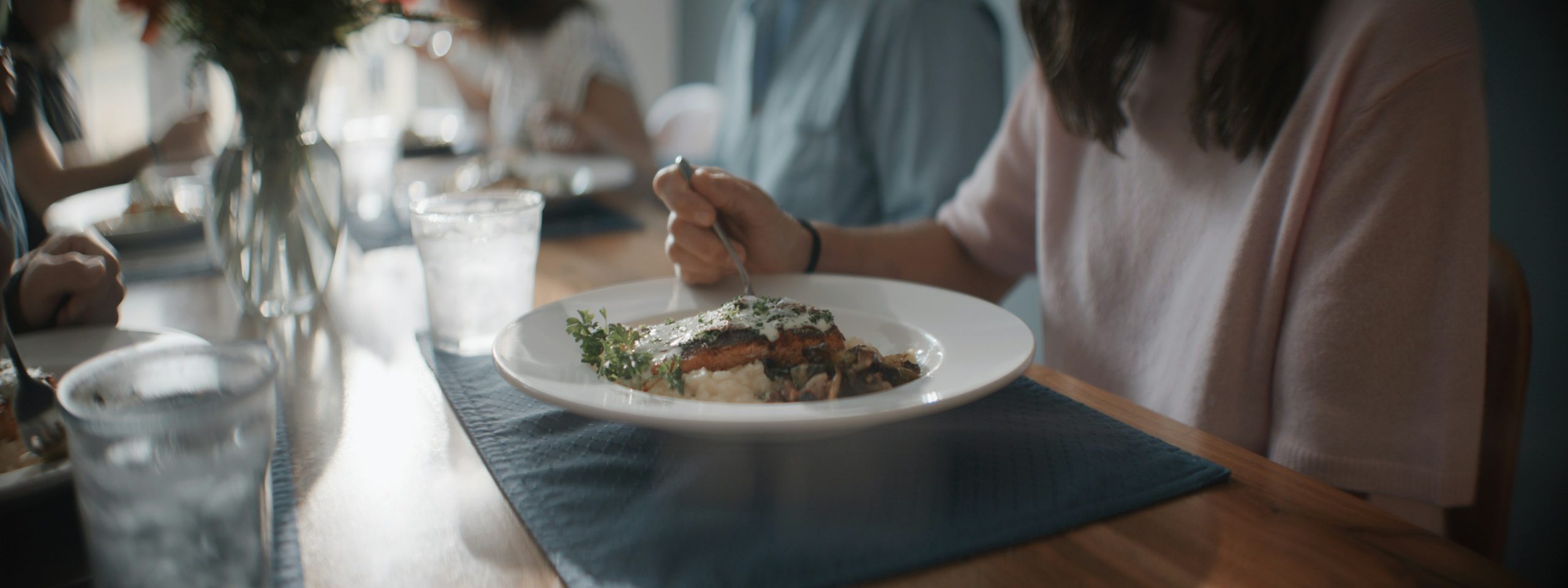
She wore an oversized hoodie despite the warm weather. Her shoes looked as though they had been worn for years, and she kept her eyes lowered. When we sat down to eat, she barely spoke. She took small bites, chewed slowly, and seemed unusually careful not to take more than she thought she should.
She also drank several glasses of water. Whenever something made a sudden noise, her attention immediately shifted toward it.
At the time, I didn’t understand what I was seeing. I only knew that something about the girl made me uncomfortable in a way I couldn’t explain.
After Emma left, I turned to Lily and reminded her that she needed to tell me before bringing someone home. Our household budget was already tight, and preparing dinner for an additional person wasn’t something I could always manage without planning.
Lily listened, then quietly explained why she had brought Emma.
Emma hadn’t eaten that day. At school, she had become so weak that she nearly fainted. Her father was working as much as he could, but medical bills and financial problems had placed the family under enormous pressure. Their electricity had recently been disconnected, and the situation at home had become increasingly difficult.
The adults at school had noticed that Emma needed to eat better. What they hadn’t understood was that she wasn’t choosing to skip meals. Sometimes, there simply wasn’t enough food.
I stood there thinking about the dinner I had just worried wouldn’t stretch far enough.
Suddenly, the problem looked very different.
I told Lily to invite Emma back the next evening.
A place at the table became part of her routine
Emma returned the following day.
At first, she behaved exactly as she had the night before. She thanked us repeatedly, ate quietly, and seemed almost apologetic about being there. She never asked for another serving, even when I offered.
But she kept coming.
Before long, her visits became a normal part of our evenings. She would arrive with Lily, put her schoolwork on the kitchen counter, and work through her assignments while I prepared dinner.
Sometimes the girls talked about school. Other times, they laughed about something that had happened during the day. Emma gradually became more comfortable, although she still had a habit of watching the food on her plate carefully.
I began making enough for everyone without thinking twice about it.
There was no announcement that Emma was now part of our dinner routine. Nobody made a big deal of it. We simply set another place at the table.
I also learned that offering help didn’t always mean asking difficult questions. Sometimes it meant letting a young person enjoy an ordinary evening without reminding her of everything that was going wrong.
For a while, I thought food was the biggest thing Emma needed.
Then her backpack fell.
What fell out of the backpack changed everything
One evening, Emma was taking off her backpack when its strap slipped from her shoulder. The bag struck the floor, and several belongings spilled across the room.
