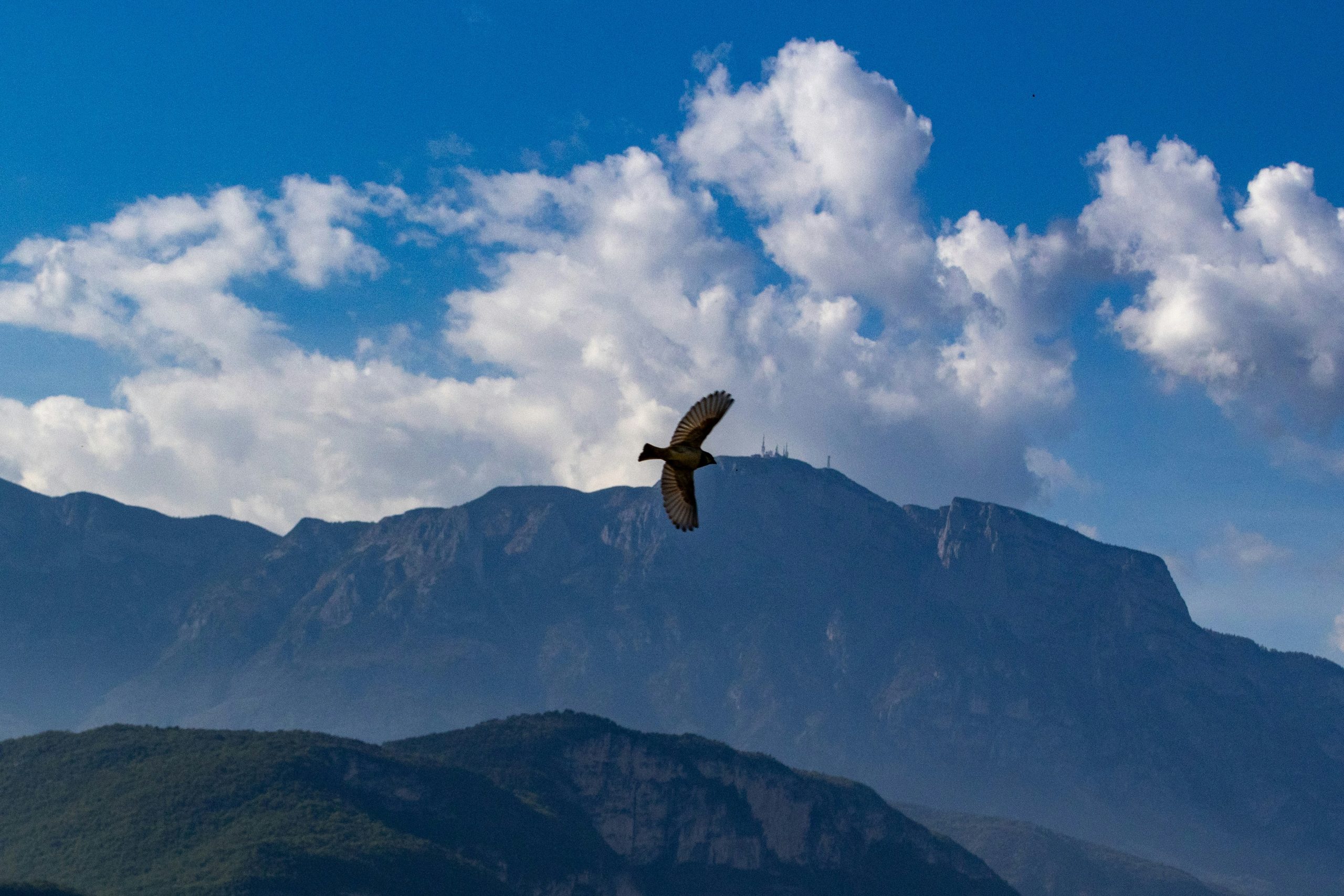
Scientists Tracked One Eagle for 20 Years—What Its Flight Patterns Revealed Was Extraordinary
For twenty years, researchers followed the movements of a single eagle, collecting GPS data that gradually revealed a remarkable picture of how a wild bird navigates its environment.
At first, the tracking information appeared confusing. Lines stretched across mountains, rivers, valleys, and open landscapes, creating a complicated web of movements that seemed difficult to explain. The eagle changed direction, took unexpected detours, and sometimes appeared to travel far beyond what researchers might have predicted.
But the longer scientists examined the data, the more interesting the picture became.
What initially looked like random movement suggested something much more sophisticated: an animal constantly responding to its surroundings, adjusting its movements according to conditions that are not always visible to human observers.
The story offers a fascinating way to think about animal navigation, environmental awareness, and the limits of our understanding of intelligence in the natural world.
There is, however, an important distinction between the broader science of eagle movement and the specific twenty-year study described in this account. Without a named research project, publication, or tracking record, the details of this particular eagle’s story cannot be independently confirmed. The scientific principles behind the narrative, however, offer plenty to explore.
Why an Eagle’s Flight Path Can Look Random
When people look at a map, they generally expect movement to follow recognizable routes.
A journey has a starting point, a destination, and a path connecting the two. When an animal travels across a landscape, it can be tempting to interpret its movements in the same way.
But wildlife does not navigate according to the neat lines people draw on maps.
An eagle may change direction because of wind, weather, available food, terrain, or an opportunity that appears unexpectedly. It might circle above a particular area, travel along a mountain ridge, or take a longer route that offers better flying conditions.
On a GPS tracking screen, these decisions can look unpredictable.
Yet a bird’s route may make considerably more sense when researchers examine the environmental conditions surrounding each movement.
A sudden change in direction, for example, might correspond with a shift in wind conditions. A longer period of circling could indicate that the bird is using rising warm air to gain altitude.
The apparent disorder may therefore reflect an animal responding to a constantly changing environment rather than following a fixed route.
The Invisible Highways That Help Eagles Fly
One of the most fascinating aspects of eagle flight is the way these birds use moving air to travel efficiently.
Eagles are powerful fliers, but soaring can help them cover considerable distances without constantly flapping their wings.
Two important sources of lift are thermals and ridge lift.
Thermals are rising columns of warm air created when the sun heats the ground unevenly. As the warmer air rises, birds can circle within these columns to gain altitude.
Once they reach a suitable height, they can glide toward another area where rising air is available.
Ridge lift works differently. When wind encounters a mountain, hill, or other elevated terrain, it can be forced upward along the slope. Soaring birds can use this rising air to remain airborne while traveling along the landscape.
These natural air currents can function like invisible highways.
To someone watching from the ground, an eagle circling repeatedly above one location might appear to be wasting time. In reality, it may be gaining altitude before continuing its journey.
A bird that follows a longer route along a mountain ridge may also be taking advantage of favorable airflow.
Understanding these mechanisms helps explain why the shortest distance between two points is not necessarily the most efficient route for a flying animal.
How Weather Can Change an Eagle’s Journey
Wind and weather are central to the movement of large soaring birds.
